
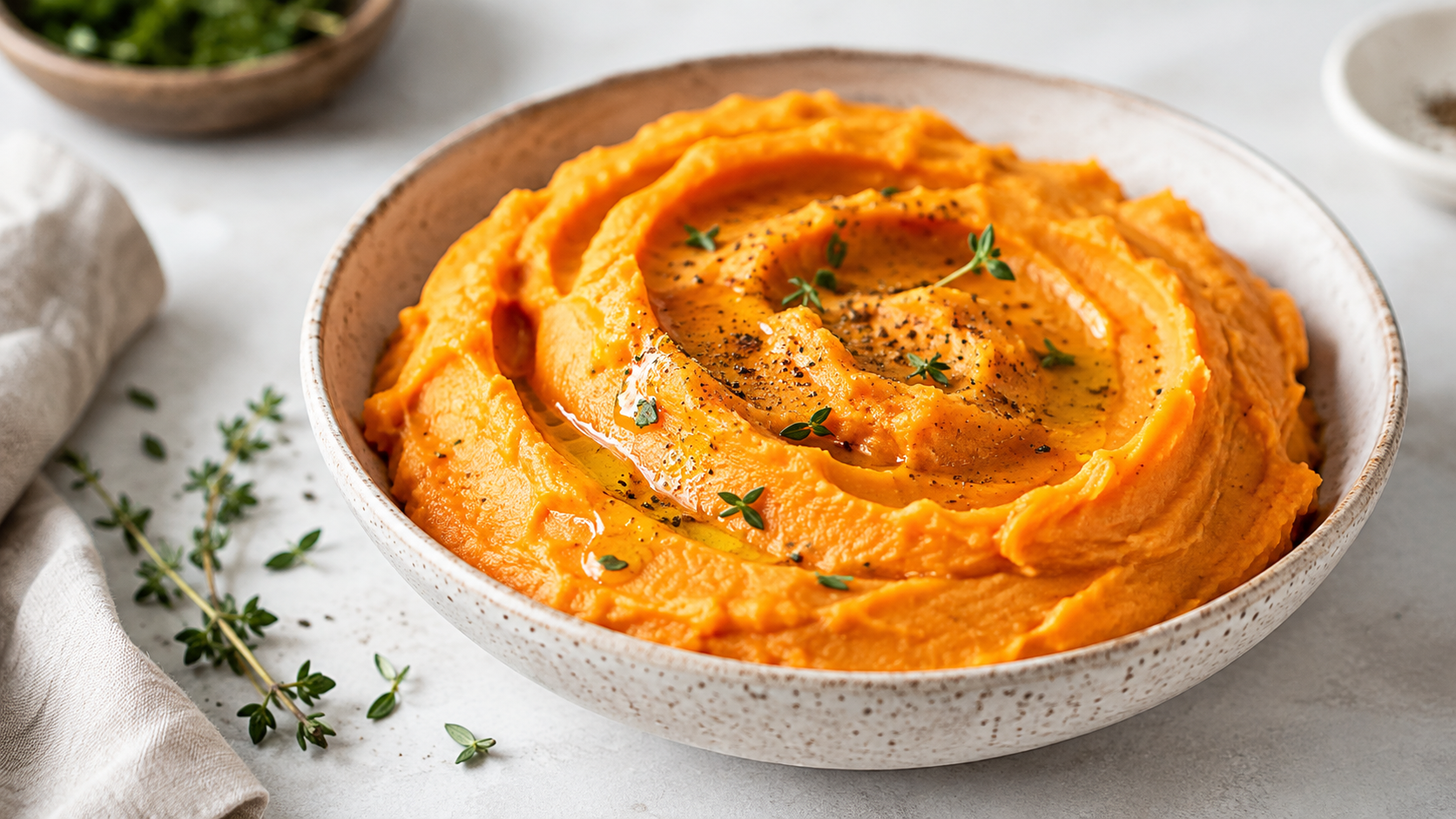
Creamy, comforting and a gorgeous vibrant orange, sweet potato mash is a fibre-rich upgrade on the usual mashed potato that pairs with almost any protein. Naturally sweet and satisfying, it delivers more fibre and nutrients than the white-potato version for around 160 calories a serving. It is the kind of comforting side that makes a lean protein feel like a proper, hearty dinner, while quietly getting more veg and fibre onto your plate.
A quick word first: I am not a doctor or a dietitian, just someone who lived this. None of these foods or supplements are medication, and if you are on a GLP-1, check anything new with your GP or pharmacist. Right, let us get to it.
For why fibre matters so much on the jab, see fibre on GLP-1, and for the wider plan, my complete GLP-1 guide.
Why sweet potato mash is a smart swap
Swapping white mash for sweet potato is a small change with real nutritional payoff.
More fibre and nutrients. Sweet potatoes bring more fibre, beta-carotene and vitamins than white potatoes, so this mash does you more good while tasting just as comforting.
Naturally sweet, needs little else. Sweet potato has a lovely natural sweetness, so you need very little added to make a delicious mash — no mountain of butter required.
Comforting and satisfying. It gives you that creamy, comforting mash satisfaction that makes a plain protein feel like a proper meal.
Small swaps that add up over time
A lot of people think successful weight loss is about dramatic, wholesale changes, but in my experience it is far more about the accumulation of small, sustainable swaps that you barely notice individually but which add up enormously over time. Swapping white mashed potato for sweet potato mash is a perfect example of exactly this kind of swap. On its own, on any single evening, it is a minor change — a slightly more nutritious, higher-fibre mash instead of the standard one. But make that swap, and a dozen others like it, consistently over months, and the cumulative effect on your fibre intake, your nutrient intake and your overall diet is significant. Small swaps, repeated, are the real engine of lasting change.
The beauty of swaps like this is that they require almost no willpower and involve no sense of deprivation, because you are not giving anything up — you are simply choosing a slightly better version of something you were going to eat anyway. Sweet potato mash instead of white. Greek yoghurt instead of cream. Wholemeal instead of white. Roasted veg instead of boiled. A piece of fruit instead of a biscuit. Sparkling water instead of a fizzy drink. None of these feels like a hardship, and none requires you to go hungry or resist temptation, yet together they transform the overall quality of your diet. On a GLP-1, where the medication handles a lot of the appetite side, these consistent small swaps are how you make sure the food you do eat is doing you as much good as possible — more protein, more fibre, more nutrients, fewer empty calories. So do not get hung up on needing to overhaul everything overnight. Just start making the better choice in small, easy ways, again and again, and let the swaps compound. This sweet potato mash is one such swap, and it is a genuinely delicious one.
The macros that matter
Here is roughly what one serving gives you. Treat these as a guide rather than gospel, since it depends on your exact ingredients and portions:
| Approx per serving | Amount |
|---|---|
| Calories | ~160 kcal |
| Protein | 3g |
| Carbohydrate | 30g |
| Fat | 4g |
| Fibre | 4g |
The protein figure is the one I watch on a GLP-1. As a rough guide I aim for somewhere around 1.2 to 1.6g of protein per kilo of body weight across the day to protect muscle while losing fat, and I judge every meal by how much of that it contributes. I log meals like this in Cronometer (it is free) so I know I am actually hitting my targets rather than hoping. The first time I tracked properly I realised I was eating far less protein than I thought, so if you have never done it, give it two weeks.
What you need (serves 1)
- 3 medium sweet potatoes, peeled and chopped
- 1 tbsp Greek yoghurt or a splash of milk (dairy or plant)
- 1 small clove garlic (optional)
- A pinch of ground cinnamon or smoked paprika (optional)
- Salt and black pepper
- Fresh chives or parsley to finish
How to make it
- Boil or steam the chopped sweet potato until very tender, about 15 minutes.
- Drain really well — sweet potato holds a lot of water, and excess makes the mash sloppy.
- Return to the pan and mash with the Greek yoghurt or a splash of milk, plus the garlic and spice if using.
- Season well with salt and pepper — mash needs proper seasoning to taste of anything.
- For an extra-smooth mash, use a stick blender, but do not overwork it or it can go gluey.
- Scatter with fresh herbs and serve alongside your protein.
Adapting it
Easy to tune:
Add protein. Mash in extra Greek yoghurt for creaminess and a little protein.
Mix with other veg. Mash with carrot, swede or butternut squash for variety.
Go savoury or sweet. Smoked paprika and garlic for savoury, a pinch of cinnamon for a subtly sweet mash. See fibre on GLP-1.
Getting sweet potato mash smooth, not gluey
Sweet potato mash has one particular pitfall worth knowing about: it can turn gluey and sticky if you treat it wrong, which is disappointing when you are after something light and creamy. The main causes are excess moisture and overworking, and both are easy to avoid. First, moisture: sweet potatoes absorb a lot of water when boiled, and mashing wet potato gives you a loose, sloppy result, so drain them really thoroughly, and ideally let them steam-dry in the colander for a minute or return them to the hot dry pan briefly to drive off excess water before mashing. Better still, steam or bake the sweet potatoes rather than boiling them — baking in particular concentrates their flavour and keeps them dry, giving the best mash of all, though it takes longer. Second, overworking: sweet potato, like regular potato, contains starch, and if you mash or especially blend it too vigorously and for too long, you break down the starch cells and release too much starch, which turns the mash gluey and gummy. So mash it just until smooth and stop; do not keep going. If you want it really smooth, a quick go with a masher or a ricer is better than blitzing it for ages in a processor, which is the surest way to make it gluey. Season it generously, because mash of any kind is bland without proper salt and pepper, and the natural sweetness of sweet potato is beautifully set off by a savoury seasoning like smoked paprika or garlic, or leaned into with a touch of cinnamon. Get the moisture right, do not overwork it, and season well, and you will have a light, creamy, vibrant mash that is every bit as comforting as white mash but more nutritious and full of fibre. It is a simple side, but these small details make all the difference between lovely and gluey.
Make ahead and reheat
Sweet potato mash reheats well, so it is a handy make-ahead side. Make a batch, keep it in the fridge for three to four days, and reheat gently with a splash of milk or water to loosen it. It freezes reasonably well too. Having a comforting, fibre-rich side ready to go takes the effort out of a weeknight dinner, and it is a useful part of my meal prep ideas for Mounjaro.
How I use it alongside my meals
Sweet potato mash is my comforting side for the evenings I want something creamy and hearty under my protein. It sits beautifully with grilled chicken, sausages, fish, or the casseroles and stews from my high-protein dinner ideas, soaking up the juices and adding a serving of veg and real fibre to the plate, so a lean protein feels like a proper, satisfying dinner.
It is carb-focused and brings little protein, so I always pair it with a good protein source — the mash is there for comfort, fibre and nutrients. Because sweet potato is more nutritious and higher in fibre than white potato, it is a smarter choice of comforting carb. My complete GLP-1 guide explains how the whole plate fits together.
When your appetite is low
Soft, smooth and comforting, a spoonful of sweet potato mash is one of the gentler things to face on a low-appetite evening, getting some fibre and nutrients in without being heavy. Pair it with a little protein if you can. When cooking feels like too much, HelloFresh keeps proper meals coming. More in what to eat with no appetite.
Supplements that pair well
Sweet potato is rich in beta-carotene and fibre, so a probiotic like Pre + Pro 15 complements the fibre well. As a carb-focused side it is low in omega-3, so I top up with Super Omega-3 EPA. The free Lily & Loaf lifestyle analysis matches a routine to your goals.
Frequently asked questions
Is sweet potato mash healthier than normal mash?
Nutritionally, yes — sweet potatoes bring more fibre, beta-carotene and vitamins than white potatoes, and their natural sweetness means you need less butter to make a delicious mash. It is a smart, easy swap.
How do I stop it going gluey?
Do not overwork it — mash just until smooth and stop, and avoid blitzing it for ages in a processor, which releases starch and turns it gummy. Draining or baking the potatoes to keep them dry helps too.
Should I boil or bake the sweet potatoes?
Baking gives the best flavour and driest, least watery mash, though it takes longer. Steaming is a good middle ground. If you boil them, drain really thoroughly and steam-dry before mashing to avoid a sloppy result.
Can I make it dairy-free?
Yes — use a splash of plant milk, a spoon of plant yoghurt, or just a little olive oil for richness. Sweet potato is naturally creamy enough that it needs very little added.
Does it reheat and freeze well?
Yes — it keeps three to four days in the fridge and reheats well with a splash of liquid to loosen it, and it freezes reasonably too. That makes it a handy make-ahead comfort side.
The bottom line
Sweet potato mash is a fibre-rich, comforting upgrade on the usual mash — creamy, naturally sweet and more nutritious, for around 160 calories a serving. It is a perfect example of the small, easy swaps that require no willpower but add up enormously over a weight-loss journey. Get the moisture right, do not overwork it, season well, and pair it with a protein. To match your supplements to a fibre-rich diet, the free Lily & Loaf lifestyle analysis is a quick, no-pressure check.
The tools I lean on
If you are putting a GLP-1 routine together, this is the order I would do it in, free tools first:
- Track a fortnight of food in Cronometer so you can see your real protein and calories.
- Take the free Lily & Loaf lifestyle analysis to find the supplements actually worth buying.
- Start an Audible trial for something to listen to while you cook or walk.
- Keep HelloFresh on standby for the weeks cooking from scratch just is not happening.
A bit about me
I am Alan Spicer. I lost around seven stone on Mounjaro and filmed the whole thing, warts and all, on my YouTube channel. Simple, nutrient-packed sides like this helped me eat more veg, add fibre, and keep my meals interesting while the weight came off.
This article shares my personal experience and general information only. It is not medical advice. Food and supplements support a balanced diet and healthy lifestyle and do not replace it or any treatment prescribed by your doctor. Speak to your GP or pharmacist before making changes, especially while on a GLP-1 medication. Nutrition figures are approximate and will vary with the exact ingredients and brands you use.
Inspired by the kind of fresh, wholefood sides in the Lily & Loaf sides collection. This is my own version, written from my own kitchen.
Discover more from Healthy Weight Loss GLP1
Subscribe to get the latest posts sent to your email.