
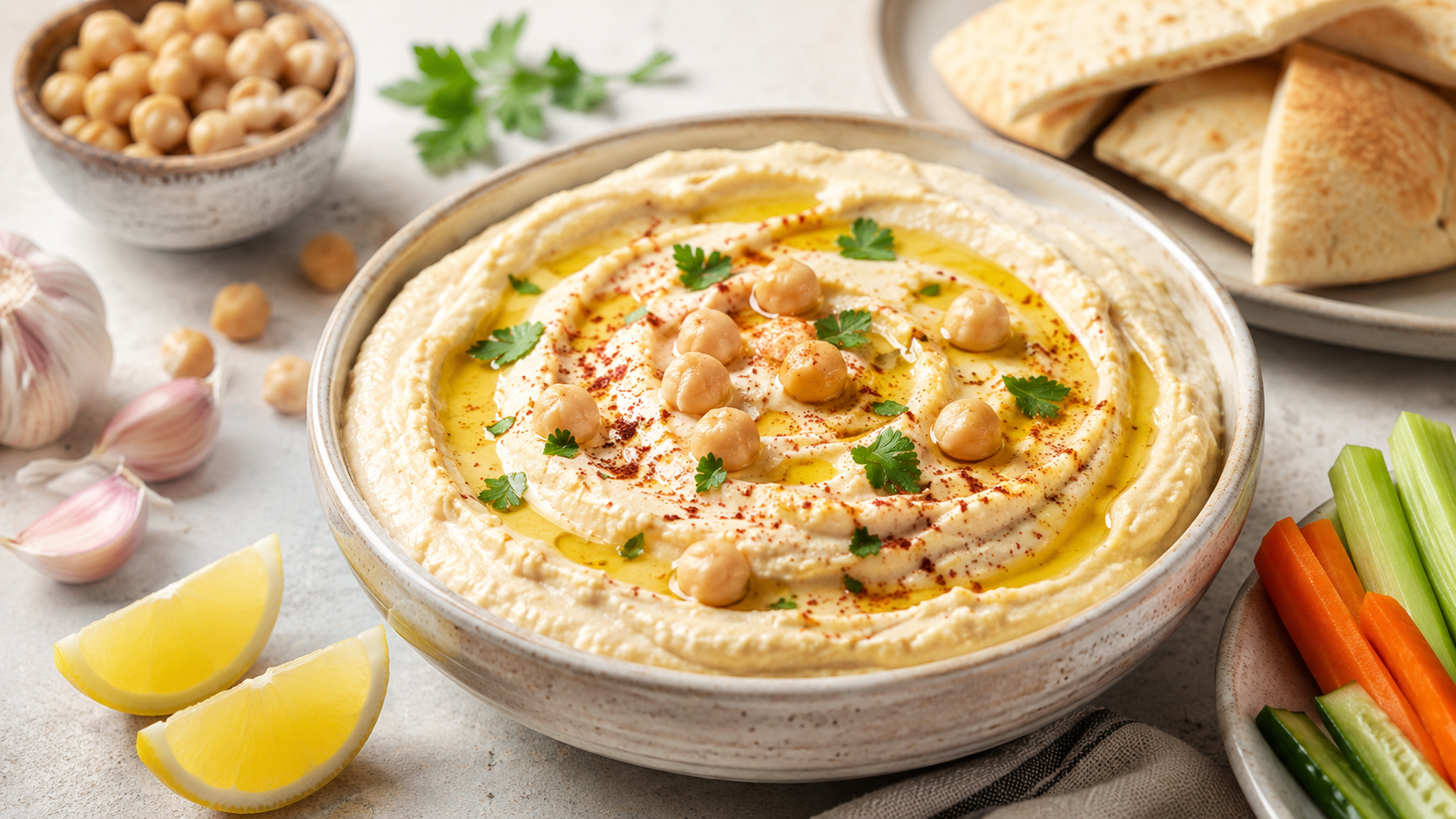
Shop-bought hummus is fine, but homemade is a different thing entirely — fresher, tastier, and far higher in actual chickpeas, which means more protein and fibre per spoon. This homemade hummus takes five minutes in a blender and gives you a versatile, high-fibre side and dip for around 150 calories a serving. On a GLP-1, where every mouthful should earn its place, a proper chickpea-packed hummus is a genuinely useful thing to have in the fridge.
A quick word first: I am not a doctor or a dietitian, just someone who lived this. None of these foods or supplements are medication, and if you are on a GLP-1, check anything new with your GP or pharmacist. Right, let us get to it.
For why fibre matters so much when you eat less, see fibre on GLP-1, and for the wider plan, my complete GLP-1 guide.
Why homemade hummus beats the tub
This is one of those things that is so much better made yourself that it is worth the five minutes.
More chickpeas, more protein and fibre. Cheap shop tubs are often bulked out with oil and water; homemade lets you pack in the chickpeas, so you get more protein and fibre per spoon.
You control the oil and salt. Making your own means you decide how much olive oil and salt goes in, keeping it lighter and healthier than many shop versions.
It makes veg genuinely appealing. A good hummus turns a plate of raw veg sticks into something you actually want to eat, which is a real win for getting your fibre in.
Why a good dip is a secret weapon for eating more veg
One of the quiet challenges on a GLP-1 is getting enough vegetables and fibre in when your appetite is smaller and plain veg does not exactly excite you. This is where a good dip like hummus earns its place as a genuine secret weapon. A bowl of raw carrot, pepper and cucumber sticks is worthy but dull; the same veg with a generous scoop of homemade hummus becomes something you genuinely look forward to. The dip does the job of making the healthy thing appealing, and that psychological nudge is worth a lot when you are trying to build good habits.
It is a principle I lean on across my eating: make the healthy option the appealing option, and you do not have to rely on willpower. Hummus with veg sticks as an afternoon snack, a dollop alongside a protein at dinner, spread in a wrap instead of mayo, or thinned with a little water into a dressing — it is endlessly useful, and every use is nudging more chickpeas, fibre and nutrients into your day. Keeping a batch of good homemade hummus in the fridge is one of the simplest, cheapest things you can do to eat more veg and more fibre without it feeling like a chore. That is exactly the kind of small, sustainable habit that adds up over a weight-loss journey.
The macros that matter
Here is roughly what one serving gives you. Treat these as a guide rather than gospel, since it depends on your exact ingredients and portions:
| Approx per serving | Amount |
|---|---|
| Calories | ~150 kcal |
| Protein | 6g |
| Carbohydrate | 12g |
| Fat | 9g |
| Fibre | 5g |
The protein figure is the one I watch on a GLP-1. As a rough guide I aim for somewhere around 1.2 to 1.6g of protein per kilo of body weight across the day to protect muscle while losing fat, and I judge every meal by how much of that it contributes. I log meals like this in Cronometer (it is free) so I know I am actually hitting my targets rather than hoping. The first time I tracked properly I realised I was eating far less protein than I thought, so if you have never done it, give it two weeks.
What you need (serves 1)
- 1 tin chickpeas, drained (save a little of the liquid)
- 1 tbsp tahini
- 1 clove garlic, crushed
- Juice of ½ lemon
- 1 tbsp olive oil
- ½ tsp ground cumin
- Salt to taste
- A splash of water or the chickpea liquid to loosen
- To finish: a drizzle of olive oil and a sprinkle of paprika
How to make it
- Tip the drained chickpeas into a blender or food processor.
- Add the tahini, garlic, lemon juice, olive oil, cumin and a good pinch of salt.
- Blend, adding a splash of water or the reserved chickpea liquid a little at a time, until smooth and creamy.
- Taste and adjust — more lemon for zing, more salt, more garlic to your liking.
- For an extra-smooth hummus, blend for a good couple of minutes.
- Scrape into a bowl, finish with a drizzle of olive oil and a sprinkle of paprika, and serve.
Making it work harder
Hummus is endlessly adaptable:
Add extra protein. Blend in a spoon of Greek yoghurt for a creamier, higher-protein version.
Change the flavour. Roasted red pepper, beetroot, or a handful of herbs blended in make completely different dips from the same base.
Thin it into a dressing. Loosen with more water and lemon and it becomes a brilliant salad dressing. See fibre on GLP-1.
The secret to really smooth hummus
If your homemade hummus has ever come out grainy or a bit rough, there are a few tricks that take it to silky, shop-quality smoothness. The biggest one is to blend it for far longer than you think — a good two to three minutes in the processor, stopping to scrape down the sides, makes an enormous difference to the texture. The second is liquid: adding a splash of water or the chickpea tin liquid, known as aquafaba, a little at a time as you blend, loosens it into a creamy rather than stiff paste. For the ultimate smoothness, some people slip the skins off the chickpeas before blending, which is fiddly but genuinely transformative if you want restaurant-level silkiness — warming the chickpeas first makes the skins come off more easily. Good tahini matters too; a smooth, runny, well-stirred tahini blends in far better than a stiff, separated one. You do not need all of these — long blending and enough liquid will get you most of the way there — but they are worth knowing if you want to make hummus that genuinely beats anything you can buy. It is a simple thing to make, but these small details are the difference between good and exceptional.
A perfect batch-and-store side
Hummus is ideal for batch-making. It keeps happily in the fridge for four to five days in a sealed tub, so a five-minute blend on Sunday gives you a healthy dip and side to lean on all week. It is a mainstay of my meal prep ideas for Mounjaro — I always have some in for veg sticks, wraps and alongside dinners. A good sealed storage tub keeps it fresh.
How I use it alongside my meals
Hummus is a side and a dip rather than a meal, so I use it to make my protein-first eating more appealing and to sneak in extra fibre. A scoop alongside grilled chicken or fish, spread in place of mayo in a high-protein lunch wrap, or with veg sticks as an afternoon nibble — it adds flavour, healthy fats and a little protein and fibre wherever it goes.
Because it is chickpea-based, it does bring a useful protein and fibre boost for a side, but I never rely on it for the bulk of my protein — that comes from the main event, guided by my high-protein dinner ideas. Think of hummus as the thing that makes your veg and your protein more enjoyable, nudging up your fibre in the process. My complete GLP-1 guide explains how the whole plate fits together.
When your appetite is low
On a low-appetite day, a good dip can be the thing that makes a small amount of food appealing when nothing else does — a little hummus with a few veg sticks or some protein is easy to manage and still nudges in fibre and nutrients. When cooking anything feels like too much, HelloFresh keeps proper meals coming. More in what to eat with no appetite.
Supplements that pair well
As a fibre-rich, chickpea-based side, hummus fits a gut-friendly routine well, so a probiotic like Pre + Pro 15 pairs naturally, and if digestion is your battle, my gut health supplements guide helps. It is naturally low in omega-3, so I top up with Super Omega-3 EPA. The free Lily & Loaf lifestyle analysis matches a routine to your goals.
Frequently asked questions
Is homemade hummus healthier than shop-bought?
Usually yes — you control the oil and salt and can pack in more chickpeas, so you get more protein and fibre per spoon. Many cheap shop tubs are bulked out with oil and water, lowering the chickpea content.
How long does homemade hummus keep?
Four to five days in a sealed tub in the fridge, which makes it a great batch-make side. Give it a stir before serving if it firms up, and loosen with a little water if needed.
How do I make it really smooth?
Blend it for two to three minutes, add liquid (water or the chickpea tin liquid) a little at a time, and use a good runny tahini. Slipping the chickpea skins off first gives the silkiest result if you have the patience.
Can I make it without tahini?
Yes — it will be a little different but still delicious. Add a little extra olive oil or a spoon of Greek yoghurt for creaminess, or try a nut butter for a twist.
Is hummus high in protein?
It brings a useful amount of plant protein and fibre from the chickpeas, but it is a side rather than a main protein source. Use it to boost a protein-first meal, not to replace the protein itself.
The bottom line
Homemade hummus is a five-minute side worth making yourself — fresher, higher in chickpeas, and packing more protein and fibre per spoon than most shop tubs, for around 150 calories a serving. A good dip is a genuine secret weapon for eating more veg and fibre on a GLP-1, because it makes the healthy option the appealing one. Batch it for the week and use it everywhere. To match your supplements to a high-fibre routine, the free Lily & Loaf lifestyle analysis is a quick, no-pressure check.
The tools I lean on
If you are putting a GLP-1 routine together, this is the order I would do it in, free tools first:
- Track a fortnight of food in Cronometer so you can see your real protein and calories.
- Take the free Lily & Loaf lifestyle analysis to find the supplements actually worth buying.
- Start an Audible trial for something to listen to while you cook or walk.
- Keep HelloFresh on standby for the weeks cooking from scratch just is not happening.
A bit about me
I am Alan Spicer. I lost around seven stone on Mounjaro and filmed the whole thing, warts and all, on my YouTube channel. Simple, nutrient-packed sides like this helped me eat more veg, add fibre, and keep my meals interesting while the weight came off.
This article shares my personal experience and general information only. It is not medical advice. Food and supplements support a balanced diet and healthy lifestyle and do not replace it or any treatment prescribed by your doctor. Speak to your GP or pharmacist before making changes, especially while on a GLP-1 medication. Nutrition figures are approximate and will vary with the exact ingredients and brands you use.
Inspired by the kind of fresh, wholefood sides in the Lily & Loaf sides collection. This is my own version, written from my own kitchen.
Discover more from Healthy Weight Loss GLP1
Subscribe to get the latest posts sent to your email.