
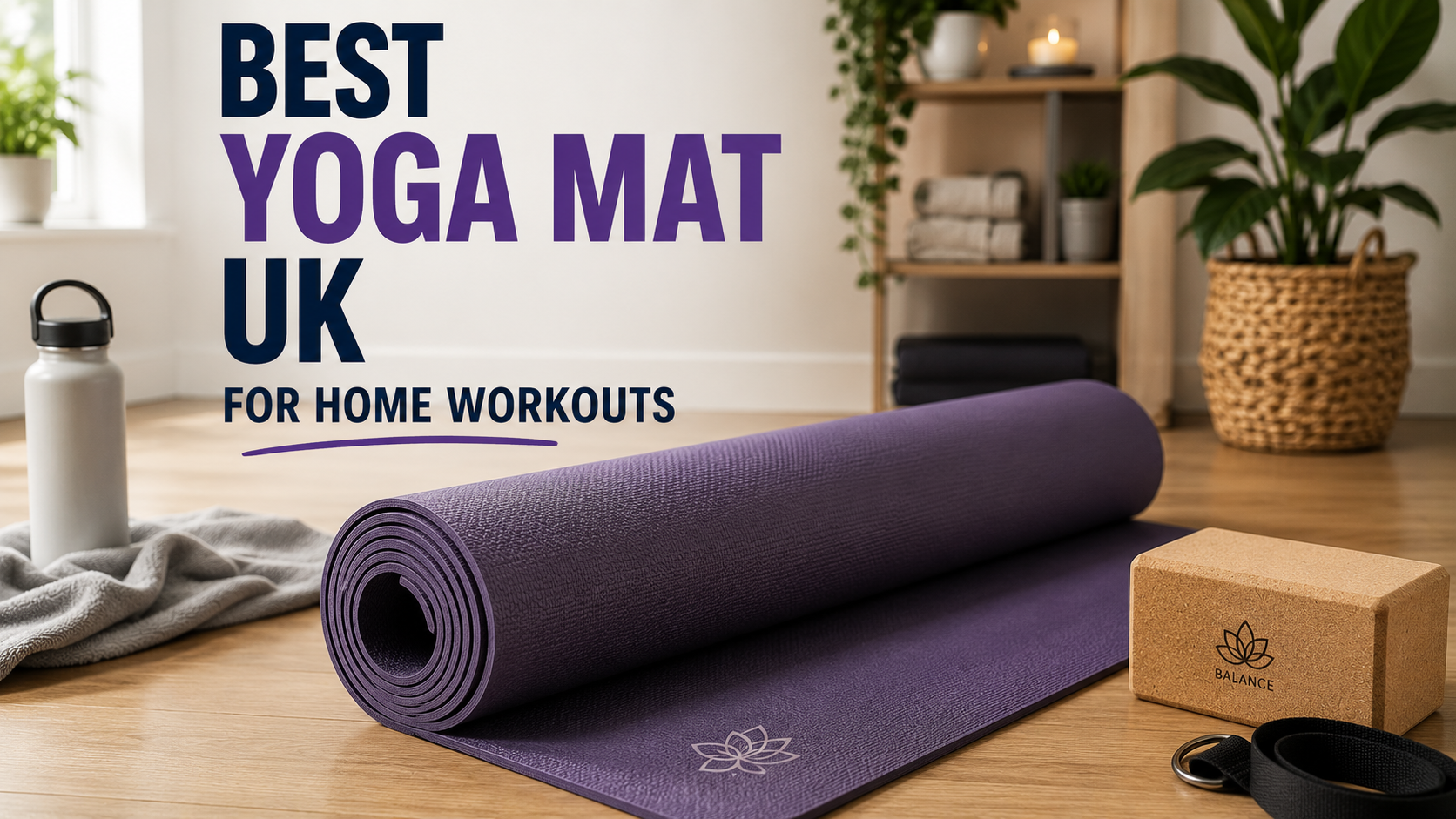
A yoga mat is one of the most versatile and low-cost pieces of home training equipment available — used for yoga, Pilates, floor-based strength work, stretching, and core training. For GLP-1 users, it broadens the home workout toolkit beyond kettlebells and dumbbells into lower-impact, mobility-focused training that’s particularly useful on injection days and during recovery weeks. These are the best options in the UK at each price point and what actually matters in a mat for the types of training that complement Mounjaro treatment.
For the broader training picture: Best Kettlebell Workouts for GLP-1 UK and Bodyweight Workout for GLP-1 Beginners UK.
Where a yoga mat fits into GLP-1 training
A common mistake in setting up a home training environment is buying only high-intensity equipment (kettlebells, resistance bands, weights) and neglecting the lower-intensity recovery and mobility work. For GLP-1 users specifically:
Injection day and the day after: high-intensity training is often impractical when nausea and low energy are present. 20–30 minutes of yoga, Pilates, or gentle stretching on a mat provides movement and stress relief without taxing the system. Better than nothing; often better than forcing a kettlebell session through fatigue.
Mobility maintenance during weight loss: rapid weight loss changes joint loading and posture patterns. Regular floor-based mobility and core work reduces injury risk when training intensely.
Core training: dead bugs, bird dogs, hollow body holds, planks — all mat-based core exercises that support the compound strength movements performed on feet. A mat makes these more comfortable and protects the spine from hard floors.
Evening wind-down: light yoga or stretching before bed improves sleep quality — relevant for GLP-1 users where sleep disruption is common in early treatment. See Mounjaro and Sleep UK.
What matters in a yoga mat for GLP-1 home training
Thickness: the most important variable for floor-based training at higher body weights:
- 4mm: standard yoga mats. Fine for yoga and lighter work; insufficient padding for higher-impact floor work or users with joint sensitivity
- 6mm: the sweet spot for most purposes. Enough cushioning for floor exercises without losing the stability connection to the ground needed for balancing postures
- 8–10mm: maximum cushioning. Best for users with knee pain, spine sensitivity, or who primarily use the mat for floor exercises rather than yoga practice. Less stable for standing balance poses.
Grip: a mat that slides on the floor (bottom) or under the hands/feet (top) becomes dangerous during loaded exercises. Both surfaces should grip well. Natural rubber mats tend to grip better than PVC, particularly when damp from sweat.
Size: standard mat is 61cm wide × 173cm long. Taller users (over 180cm) need an extended mat (183cm or 190cm) to lie fully on the mat with room to move. Wider mats (70cm) are more comfortable for most floor exercises and worth the small extra cost.
Material: PVC (cheapest, most durable, not eco-friendly), TPE (mid-range, lighter, better eco credentials), natural rubber (best grip and cushioning, higher cost, heavier). For home training, any of these works — the grip and thickness matter more than material for most users.
Best yoga mats UK 2026
Best overall: Liforme Original
Premium UK brand. Natural rubber, 4.2mm, exceptional grip (the “GripForMe” surface is industry-leading — holds even when wet), alignment markers printed on the mat surface. 185cm × 68cm. Eco-certified. Approximately £130–140. Heavy (2.5kg) but home mats don’t need to be portable.
Worth the cost if yoga is your primary use case and you want a mat that lasts 5+ years with regular daily use. Not necessary for occasional stretching or floor exercises.
Check Liforme pricing on Amazon UK.
Best budget: Sweaty Betty Eco Yoga Mat
TPE construction, 6mm, good surface grip, 183cm × 61cm. Approximately £35–45. Good balance of thickness, grip, and price for home use. Widely reviewed positively for home training rather than hot yoga. Available directly from Sweaty Betty and on Amazon.
Best for joint sensitivity: Gaiam Essentials Thick Yoga Mat (10mm)
PVC, 10mm thick, 172cm × 61cm, approximately £25–35. The maximum cushioning option for users with knee pain, wrist sensitivity, or spine issues. The extra thickness reduces stability slightly for standing yoga poses but is excellent for floor exercises, stretching, and lower-impact core work. The most accessible premium cushioning option at a reasonable price.
Check Gaiam Thick Mat on Amazon UK.
Best for strength training use: Gorilla Mats Premium Large
183cm × 91cm (wider than standard), 6mm, high-density foam, excellent grip on hard floors. The wider format accommodates wider-stance exercises and ensures hands and feet stay on the mat during floor movements. Approximately £45–55. Best choice if your primary use is floor-based strength work and core rather than yoga. Check Gorilla Mats on Amazon UK.
Best premium mid-range: Manduka PRO
The professional trainer’s standard. 6mm PVC, closed-cell surface (doesn’t absorb sweat), exceptional durability (lifetime guarantee), 180cm × 66cm. Approximately £90–100. The best long-term value mat if you practice regularly — designed to last indefinitely. Heavy for travel but for home use this doesn’t matter.
A basic injection-day yoga and stretching routine
20 minutes, no equipment beyond the mat, appropriate for days when more intense training isn’t feasible:
Legs up the wall (viparita karani)     5 minutes
Child's pose                           2 minutes
Cat-cow (5 breaths each)               2 minutes
Supine twist (both sides)              3 minutes
Hip flexor stretch (both sides)        3 minutes
Seated forward fold                    2 minutes
Savasana (lying rest)                  3 minutes
This sequence reduces cortisol, improves lower back mobility, and activates the parasympathetic nervous system — practically useful for the fatigue and stress that can accompany injection day peaks. 20 minutes is a manageable commitment even on low-energy days.
Combining mat and kettlebell training
The most effective home setup for GLP-1 users combines a mat with a kettlebell or dumbbells:
- Mat-based warm-up (5–10 minutes) before every kettlebell session
- Core work on the mat at the end of strength sessions (dead bugs, bird dogs, planks)
- Mat-only sessions on injection days and recovery days
- Kettlebell-primary sessions on higher-energy days
This structure means you’re training seven days a week in some form — the lower-intensity mat days still provide movement, stress reduction, and sleep-quality benefits without adding to recovery debt.
Track training sessions alongside nutrition in Cronometer — noting mat-only vs full training sessions helps identify patterns in protein intake and energy on different training day types.
Frequently asked questions
Is yoga good for weight loss on Mounjaro?
Yoga isn’t a primary weight loss tool — its calorie expenditure is lower than resistance training or cardio. But it supports the other elements of a GLP-1 training programme: reducing cortisol (which slows fat loss when elevated), improving sleep quality, maintaining mobility, and providing movement on low-energy days when more intense training isn’t possible. It’s a complement to resistance training, not a replacement.
What thickness yoga mat do I need?
For most GLP-1 home training: 6mm is the sweet spot. 4mm if yoga is your primary use and you want more ground connection. 8–10mm if you have significant joint sensitivity or knee/spine issues.
Do I need a yoga mat for home kettlebell training?
Strictly no — kettlebells are done on feet. But a mat covers the floor-based components of your training (warm-up, core work, cool-down) and makes these more comfortable, which means they’re more likely to actually happen. A £35–45 mat is a reasonable investment in making your home training environment complete.
How do I clean a yoga mat?
Most mats: wipe with a damp cloth and a small amount of mild detergent after heavy use. Lay flat to dry rather than rolling wet. PVC mats can be submerged and scrubbed; natural rubber mats should not be submerged or exposed to direct sunlight for extended periods (UV degrades rubber).
Amazon links in this post use the affiliate tag (mrh04-21). Prices are indicative at time of writing.
Pilates and floor-based strength work for GLP-1 users
Pilates deserves specific mention in the GLP-1 context. Its emphasis on controlled movement, core stability, and muscle engagement at low impact makes it particularly suited to:
- Users with joint pain (knees, hips, lower back) that limits higher-impact training
- Injection day low-intensity sessions
- Building the core stability that makes kettlebell and compound movements safer and more effective
- Perimenopausal users where bone density and pelvic floor health are specific concerns
Online Pilates resources accessible without a gym membership:
- Move with Nicole (YouTube) — beginner and intermediate Pilates, no equipment
- Body by Blogilates (YouTube) — accessible, progressive, varied
- Les Mills On Demand — paid subscription but includes Pilates alongside other formats
20–30 minutes of Pilates three times per week, combined with two kettlebell sessions, produces a balanced training week for most GLP-1 users — strength and metabolism from the kettlebells; stability, core, and mobility from the Pilates. The mat covers both.
Track training sessions in Cronometer using the exercise diary. Pilates doesn’t burn a large number of calories (don’t inflate your intake to “compensate” for a Pilates session) but does contribute to the overall activity pattern that supports GLP-1 treatment outcomes. The main value is indirect: better sleep from movement, reduced cortisol, improved mobility, and more durable results from the resistance training that makes up the core of your programme.
Alan’s experience with low-intensity training on injection days — what worked, what was worth doing even at very low energy — is covered honestly on the YouTube channel, including the weeks where the yoga mat was the only training that happened.
Discover more from Healthy Weight Loss GLP1
Subscribe to get the latest posts sent to your email.