
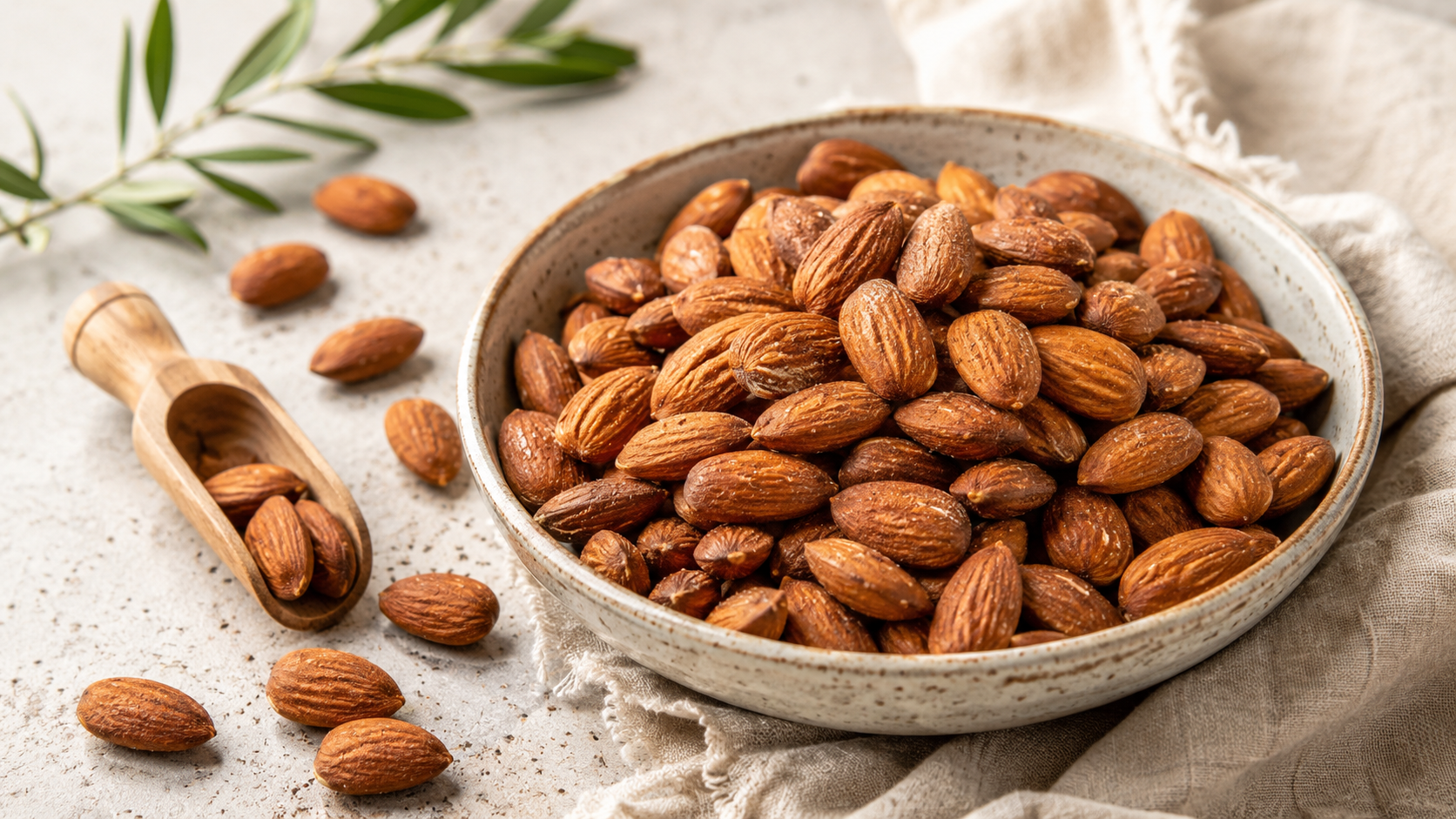
Roasting your own almonds at home, with whatever seasoning you fancy, gives you a high-protein, satisfying snack and salad topper that beats the shop-bought bags on flavour and cost. A handful of home-roasted almonds delivers protein, healthy fats and fibre for around 180 calories, and the roasting brings out a depth of flavour raw nuts just do not have. On a GLP-1, a portion-controlled nut snack is a genuinely useful thing to have ready.
A quick word first: I am not a doctor or a dietitian, just someone who lived this. None of these foods or supplements are medication, and if you are on a GLP-1, check anything new with your GP or pharmacist. Right, let us get to it.
For more snack ideas, see my high-protein snacks, and for the wider plan, my complete GLP-1 guide.
Why home-roasted almonds are worth it
A simple tray of roasted almonds is one of the most useful things to keep in the cupboard.
Protein, healthy fats and fibre. Almonds are a genuinely nutritious whole food, bringing a bit of everything that keeps you full and satisfied between meals.
Roasting deepens the flavour. A few minutes in the oven transforms raw almonds into something golden, fragrant and far more moreish, and you can season them however you like.
You control the salt and oil. Shop-roasted nuts are often heavily salted and oiled; doing your own keeps them as healthy as you want.
The honest truth about nuts and portion size
Nuts are one of those foods with a bit of a split reputation — some people treat them as a health food to eat freely, others avoid them entirely as too fatty and calorific. The truth, as usual, sits in the middle, and it comes down to portion size. Almonds are genuinely good for you: they bring protein, healthy monounsaturated fats, fibre, vitamin E and magnesium, and research consistently links moderate nut eating with good health. They are properly satisfying, which makes them a brilliant snack for staving off hunger between meals. But — and it is an important but — they are very calorie-dense, so the portion matters enormously. A small handful, around 30g, is a sensible, satisfying serving at roughly 180 calories. Mindlessly working through a big bag while watching telly, though, can easily see you eat several hundred calories without noticing, because nuts are so easy to keep reaching for.
This is where roasting your own and portioning them out is genuinely useful. Rather than eating from a big bag, I roast a batch and divide them into small portions, so a snack is a defined handful rather than an open-ended graze. That simple act of portioning turns nuts from a potential calorie trap into a controlled, nutritious snack. On a GLP-1, where the goal is maximum nutrition and satisfaction from sensible portions, almonds fit beautifully as long as you respect the portion. So do not fear nuts, and do not eat them with abandon either — treat them as the nutritious, satisfying, calorie-dense food they are, enjoy a proper handful, and portion them out so you know where you stand. Done that way, home-roasted almonds are one of the best snacks and salad toppers you can have.
The macros that matter
Here is roughly what one serving gives you. Treat these as a guide rather than gospel, since it depends on your exact ingredients and portions:
| Approx per serving | Amount |
|---|---|
| Calories | ~180 kcal |
| Protein | 6g |
| Carbohydrate | 5g |
| Fat | 16g |
| Fibre | 3g |
The protein figure is the one I watch on a GLP-1. As a rough guide I aim for somewhere around 1.2 to 1.6g of protein per kilo of body weight across the day to protect muscle while losing fat, and I judge every meal by how much of that it contributes. I log meals like this in Cronometer (it is free) so I know I am actually hitting my targets rather than hoping. The first time I tracked properly I realised I was eating far less protein than I thought, so if you have never done it, give it two weeks.
What you need (serves 1)
- 200g raw almonds (makes several portions)
- 1 tsp olive oil (optional)
- Salt to taste
- Optional seasonings: smoked paprika, ground cumin, chilli flakes, rosemary, or a little cinnamon for a sweeter version
- Store in an airtight jar
How to make it
- Heat the oven to 160C (fan 140C) — a low, gentle heat roasts nuts evenly without burning them.
- Spread the almonds on a baking tray in a single layer.
- If using, toss with a tiny bit of olive oil and your chosen seasonings, or roast them plain and season after.
- Roast for 10–12 minutes, shaking the tray once, until golden and fragrant — watch them closely near the end, as nuts burn fast.
- Let them cool completely, during which they crisp up further.
- Portion into small handfuls and store in an airtight jar.
Flavour variations
The seasoning options are endless:
Savoury and smoky. Smoked paprika, cumin and a little salt for a moreish savoury snack.
Spicy. Chilli flakes and a pinch of salt for a warming kick.
Sweet. A tiny bit of cinnamon and a whisper of maple for a sweeter treat. See high-protein snacks.
Roasting nuts without burning them
The one pitfall with roasting nuts is how quickly they go from perfectly golden to bitter and burnt, so it is worth knowing how to get it right, because burnt nuts are a waste and taste horrible. The key is a low and slow approach rather than a high heat. A moderate oven, around 160C, roasts the nuts evenly all the way through, developing their flavour gradually without scorching the outsides before the insides are done. A high heat, by contrast, burns the surface fast while leaving the centre underdone. Spread the nuts in a single layer so they roast evenly rather than steaming in a pile, and give the tray a shake halfway through to move them around. The most important rule is to watch them closely, especially in the last few minutes, and to trust your nose — when you can really smell that warm, nutty, toasty aroma, they are usually done or very close. Nuts also continue to cook a little from their own heat after they come out, and they crisp up as they cool, so it is better to pull them a touch early than to leave them until they look fully dark. If in doubt, take them out when they are golden and fragrant; they will finish as they cool. This gentle roasting approach works for all nuts and seeds, and it is what gives you that lovely deep, toasty flavour that makes home-roasted nuts so much better than raw ones, without the bitterness of burning. Get it right and a cheap bag of raw almonds becomes a genuinely delicious, moreish snack.
Batch roast and portion
This is made for batch-prep. Roast a big batch at once, let it cool completely, and portion into small handfuls in an airtight jar or little bags. Portioning is the key step — it turns nuts from an open-ended graze into a controlled snack. They keep for a couple of weeks, so a single roasting session gives you snacks and salad toppers for ages. A genuinely useful part of my meal prep ideas for Mounjaro.
How I use them alongside my meals
Roasted almonds play two roles for me. As a snack, a portioned handful is a satisfying, protein-and-fat hit that holds off hunger between meals, which is useful on the days my appetite is unpredictable. As a topper, a few chopped over a salad or a bowl of veg add crunch, flavour and a little protein and fibre, making the veg alongside my protein more interesting.
They bring a modest amount of protein for a plant food, but they are calorie-dense, so I treat them as a controlled addition rather than eating them freely — the bulk of my protein comes from the main event, and my high-protein snacks covers higher-protein options. Portioned sensibly, though, they are one of the most satisfying, nutritious little additions going. My complete GLP-1 guide explains how the whole day fits together.
When your appetite is low
On a low-appetite day, a small handful of almonds can be an easy way to get some protein, healthy fats and calories in when a full meal feels like too much — they are compact and need no preparation. When you can face more, HelloFresh keeps proper meals coming. More in what to eat with no appetite.
Supplements that pair well
Almonds bring healthy fats and magnesium, but little omega-3, so I still take Super Omega-3 EPA, and Triple Magnesium in the evening tops up magnesium for muscle and sleep. A daily Super Supplemental covers general gaps. The free Lily & Loaf lifestyle analysis matches a routine to your goals.
Frequently asked questions
Are almonds good for weight loss?
Yes, in sensible portions — they bring protein, healthy fats and fibre, and are genuinely satisfying, which helps between meals. The key is portion control, as they are calorie-dense; a small handful of around 30g is a sensible serving.
How do I roast nuts without burning them?
Use a low, gentle oven around 160C, spread them in a single layer, shake the tray halfway, and watch them closely near the end. Trust your nose — when they smell toasty they are done. Pull them a touch early, as they crisp as they cool.
How long do home-roasted almonds keep?
A couple of weeks in an airtight jar once fully cooled. Roast a big batch and portion it, and you have snacks and salad toppers ready for ages.
Are home-roasted better than shop-bought?
On flavour, cost and control, yes — roasting deepens the flavour, and you decide how much salt and oil goes in, unlike the often heavily salted and oiled shop versions.
How big should a portion be?
Around 30g, a small handful, is a sensible serving at roughly 180 calories. Portioning them out rather than eating from a big bag is the key to keeping nuts a controlled, healthy snack.
The bottom line
Home-roasted almonds are a high-protein snack and salad topper that beat the shop bags on flavour, cost and control — protein, healthy fats and fibre in a satisfying handful for around 180 calories. Nuts are genuinely good for you as long as you respect the portion, so batch-roast them and portion them out to keep them a controlled snack rather than a calorie trap. Season them however you like. To match your supplements to your goals, the free Lily & Loaf lifestyle analysis is a quick, no-pressure check.
The tools I lean on
If you are putting a GLP-1 routine together, this is the order I would do it in, free tools first:
- Track a fortnight of food in Cronometer so you can see your real protein and calories.
- Take the free Lily & Loaf lifestyle analysis to find the supplements actually worth buying.
- Start an Audible trial for something to listen to while you cook or walk.
- Keep HelloFresh on standby for the weeks cooking from scratch just is not happening.
A bit about me
I am Alan Spicer. I lost around seven stone on Mounjaro and filmed the whole thing, warts and all, on my YouTube channel. Simple, nutrient-packed sides like this helped me eat more veg, add fibre, and keep my meals interesting while the weight came off.
This article shares my personal experience and general information only. It is not medical advice. Food and supplements support a balanced diet and healthy lifestyle and do not replace it or any treatment prescribed by your doctor. Speak to your GP or pharmacist before making changes, especially while on a GLP-1 medication. Nutrition figures are approximate and will vary with the exact ingredients and brands you use.
Inspired by the kind of fresh, wholefood sides in the Lily & Loaf sides collection. This is my own version, written from my own kitchen.
Discover more from Healthy Weight Loss GLP1
Subscribe to get the latest posts sent to your email.