
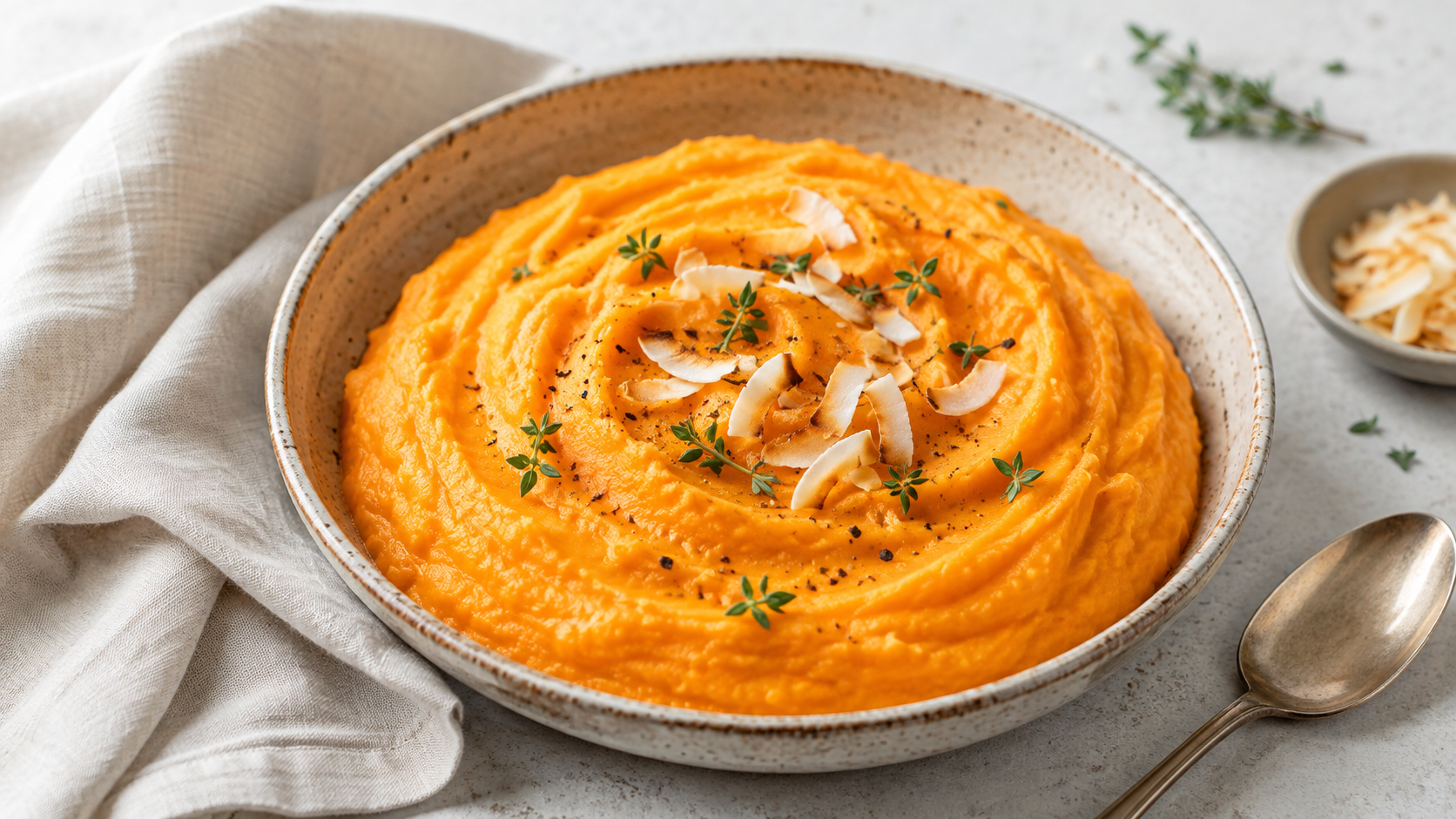
If you love mashed potato but want something lighter and more nutritious alongside your protein, this coconut carrot mash is a revelation. Sweet carrots mashed with a little coconut milk make a vibrant, silky, subtly sweet mash that is lower in carbs and higher in fibre than the potato version, at around 140 calories a serving. It is comfort-food creamy while quietly adding a load of veg to your plate.
A quick word first: I am not a doctor or a dietitian, just someone who lived this. None of these foods or supplements are medication, and if you are on a GLP-1, check anything new with your GP or pharmacist. Right, let us get to it.
For the wider approach to eating on the jab, see my complete GLP-1 guide, and for fibre, fibre on GLP-1.
Why swap potato for carrot mash
Mashed potato is comforting but carb-heavy; this swap keeps the comfort and upgrades the nutrition.
Lower in carbs, higher in fibre. Carrots bring fewer carbs and more fibre than potatoes, so you get a lighter, more filling mash that suits a GLP-1 plate.
Naturally sweet and vibrant. Carrots have a lovely natural sweetness that the coconut milk sets off beautifully, giving a mash with real character.
It sneaks in a whole extra veg. A pile of carrot mash is essentially a serving of vegetables in comforting, mashed form — a painless way to eat more veg.
Turning vegetables into comfort food
One of the mental shifts that really helped me eat well long-term was learning to turn vegetables into the comforting, satisfying forms I used to get only from starchy carbs. For most of my life, comfort food meant mashed potato, chips, rice and bread — the beige, starchy stuff. Vegetables were the boring obligation on the side. Flipping that around, so that vegetables become the comforting centre of the plate, was a genuine turning point for keeping my carbs sensible without feeling deprived. This coconut carrot mash is a perfect example: it delivers exactly the creamy, comforting, mashed satisfaction I want alongside a protein, but it is a pile of carrots rather than a pile of potato.
Once you start thinking this way, a whole world of vegetable comfort food opens up. Cauliflower becomes mash, rice or a cheese-sauce-smothered bake. Butternut squash and sweet potato become silky, comforting mashes and soups. Courgette and aubergine become the base of bakes and gratins. Carrots and swede mash together beautifully. In each case, you are getting the comforting texture and satisfaction you crave, but from nutrient-rich, fibre-packed vegetables rather than refined starch. On a GLP-1, this is genuinely valuable, because it lets you enjoy comforting, satisfying meals while keeping your carbs in check and your veg intake high, all without willpower or a sense of missing out. You are not denying yourself comfort food; you are making comfort food out of vegetables. This carrot mash is one of my favourites for exactly that reason — it scratches the mashed-potato itch while quietly getting a whole extra portion of veg onto my plate.
The macros that matter
Here is roughly what one serving gives you. Treat these as a guide rather than gospel, since it depends on your exact ingredients and portions:
| Approx per serving | Amount |
|---|---|
| Calories | ~140 kcal |
| Protein | 2g |
| Carbohydrate | 16g |
| Fat | 8g |
| Fibre | 4g |
The protein figure is the one I watch on a GLP-1. As a rough guide I aim for somewhere around 1.2 to 1.6g of protein per kilo of body weight across the day to protect muscle while losing fat, and I judge every meal by how much of that it contributes. I log meals like this in Cronometer (it is free) so I know I am actually hitting my targets rather than hoping. The first time I tracked properly I realised I was eating far less protein than I thought, so if you have never done it, give it two weeks.
What you need (serves 1)
- 4 large carrots, peeled and chopped
- 2 tbsp tinned coconut milk
- 1 small clove garlic (optional)
- A pinch of ground cumin or ginger (optional)
- Salt and black pepper
- Fresh coriander or parsley to finish
- Optional: a squeeze of lime or orange for brightness
How to make it
- Boil or steam the chopped carrots until very tender, about 15 minutes.
- Drain them well — excess water makes a watery mash.
- Return the carrots to the pan and add the coconut milk, garlic and spices if using.
- Mash until smooth, or blend for a silkier texture.
- Season with salt and pepper, and add a squeeze of lime or orange for brightness if you like.
- Scatter with fresh coriander or parsley and serve alongside your protein.
Adapting it
This mash is easy to vary:
Mix in other veg. Swede, parsnip or sweet potato mashed in with the carrot give different flavours and textures.
Add protein. A spoon of Greek yoghurt stirred in adds creaminess and a little protein.
Spice it up. Ginger, cumin or a little curry powder make a more aromatic mash. See fibre on GLP-1.
The key to a smooth, not watery, mash
The difference between a lovely silky mash and a sad, watery one comes down almost entirely to moisture control, and it is easy to get right once you know how. The biggest mistake is not draining the cooked vegetables properly. Carrots, like most veg, hold a lot of water after boiling, and if you mash them while they are still wet, you get a loose, watery, disappointing mash. So drain them really well, and for an even drier result, let them sit in the colander to steam-dry for a minute or two, or return them to the hot dry pan over a low heat for a moment to drive off excess moisture before you mash. Steaming rather than boiling the carrots in the first place also helps, as they absorb less water. The second key is what you add for creaminess and how much. Here the coconut milk brings richness and helps create a silky texture, but you only need a little — add it gradually and stop when the mash is creamy but still holds its shape, rather than drowning it. If you want it really smooth, a stick blender or food processor gives a silkier, more refined finish than a hand masher, though a good masher does a lovely rustic mash. Season generously, too — mash needs proper salt and pepper to taste of anything, and a squeeze of acid like lime brightens the sweetness beautifully. Get the moisture right and season well, and a humble carrot mash becomes genuinely luxurious, every bit as comforting as the potato version it replaces, but lighter and more nutritious. It is a simple side, but these small details are what make it special.
Make ahead and reheat
Carrot mash reheats well, so it is a handy make-ahead side. Make a batch, keep it in the fridge for three to four days, and reheat gently with a splash more coconut milk or water to loosen it. It also freezes reasonably well. Having a comforting, veg-packed side ready to go is a genuine help on a busy evening, and a useful part of my meal prep ideas for Mounjaro.
How I use it alongside my meals
This mash is my go-to comforting side for the evenings I want something creamy and warming alongside my protein without the carb load of mashed potato. It sits beautifully under a piece of grilled chicken, fish, or the lamb and casserole dishes from my high-protein dinner ideas, soaking up the juices and adding a whole portion of veg to the plate.
It brings very little protein, as you would expect from a vegetable side, so I always pair it with a proper protein — the mash is there for comfort, fibre and veg, not protein. Think of it as the satisfying, nutritious base that makes a lean protein feel like a proper, hearty dinner. My complete GLP-1 guide explains how the whole plate fits together.
When your appetite is low
Soft, smooth and comforting, a spoonful of carrot mash is one of the gentler things to manage on a low-appetite evening, and it gets some veg and fibre in without being heavy. Pair it with a little protein if you can. When cooking feels like too much, HelloFresh keeps proper meals coming. More in what to eat with no appetite.
Supplements that pair well
Carrots are rich in beta-carotene, and as a veg-based side this fits a healthy routine well. It is low in omega-3, so I top up with Super Omega-3 EPA, and a daily Super Supplemental covers general gaps. The free Lily & Loaf lifestyle analysis matches a routine to your goals.
Frequently asked questions
Is carrot mash lower carb than mashed potato?
Yes — carrots have fewer carbs and more fibre than potatoes, so carrot mash is a lighter, more filling alternative. It gives you the same creamy comfort while sneaking in a whole extra portion of veg.
How do I stop it being watery?
Drain the cooked carrots really well, and let them steam-dry or return them to the hot dry pan for a moment before mashing. Steaming rather than boiling helps too, and add the coconut milk gradually rather than all at once.
Can I make it without coconut milk?
Yes — a splash of stock, a knob of butter, or a spoon of Greek yoghurt all work to make it creamy. Coconut milk just adds a lovely subtle sweetness that suits the carrots particularly well.
What can I mix with the carrots?
Swede, parsnip and sweet potato all mash beautifully with carrot for different flavours and textures. A carrot and swede mash is a classic, and sweet potato makes it richer and sweeter.
Does it reheat and freeze well?
Yes — it keeps three to four days in the fridge and reheats well with a splash of liquid to loosen it, and it freezes reasonably too. That makes it a handy make-ahead comfort side.
The bottom line
Coconut carrot mash is a lighter, more nutritious take on mashed potato — silky, subtly sweet and comforting, with fewer carbs and more fibre, for around 140 calories a serving. Turning vegetables into comfort food lets you enjoy satisfying, creamy meals while keeping your carbs sensible and your veg high, without any sense of missing out. Get the moisture right, season well, and pair it with a protein. To match your supplements to a veg-rich diet, the free Lily & Loaf lifestyle analysis is a quick, no-pressure check.
The tools I lean on
If you are putting a GLP-1 routine together, this is the order I would do it in, free tools first:
- Track a fortnight of food in Cronometer so you can see your real protein and calories.
- Take the free Lily & Loaf lifestyle analysis to find the supplements actually worth buying.
- Start an Audible trial for something to listen to while you cook or walk.
- Keep HelloFresh on standby for the weeks cooking from scratch just is not happening.
A bit about me
I am Alan Spicer. I lost around seven stone on Mounjaro and filmed the whole thing, warts and all, on my YouTube channel. Simple, nutrient-packed sides like this helped me eat more veg, add fibre, and keep my meals interesting while the weight came off.
This article shares my personal experience and general information only. It is not medical advice. Food and supplements support a balanced diet and healthy lifestyle and do not replace it or any treatment prescribed by your doctor. Speak to your GP or pharmacist before making changes, especially while on a GLP-1 medication. Nutrition figures are approximate and will vary with the exact ingredients and brands you use.
Inspired by the kind of fresh, wholefood sides in the Lily & Loaf sides collection. This is my own version, written from my own kitchen.
Discover more from Healthy Weight Loss GLP1
Subscribe to get the latest posts sent to your email.