
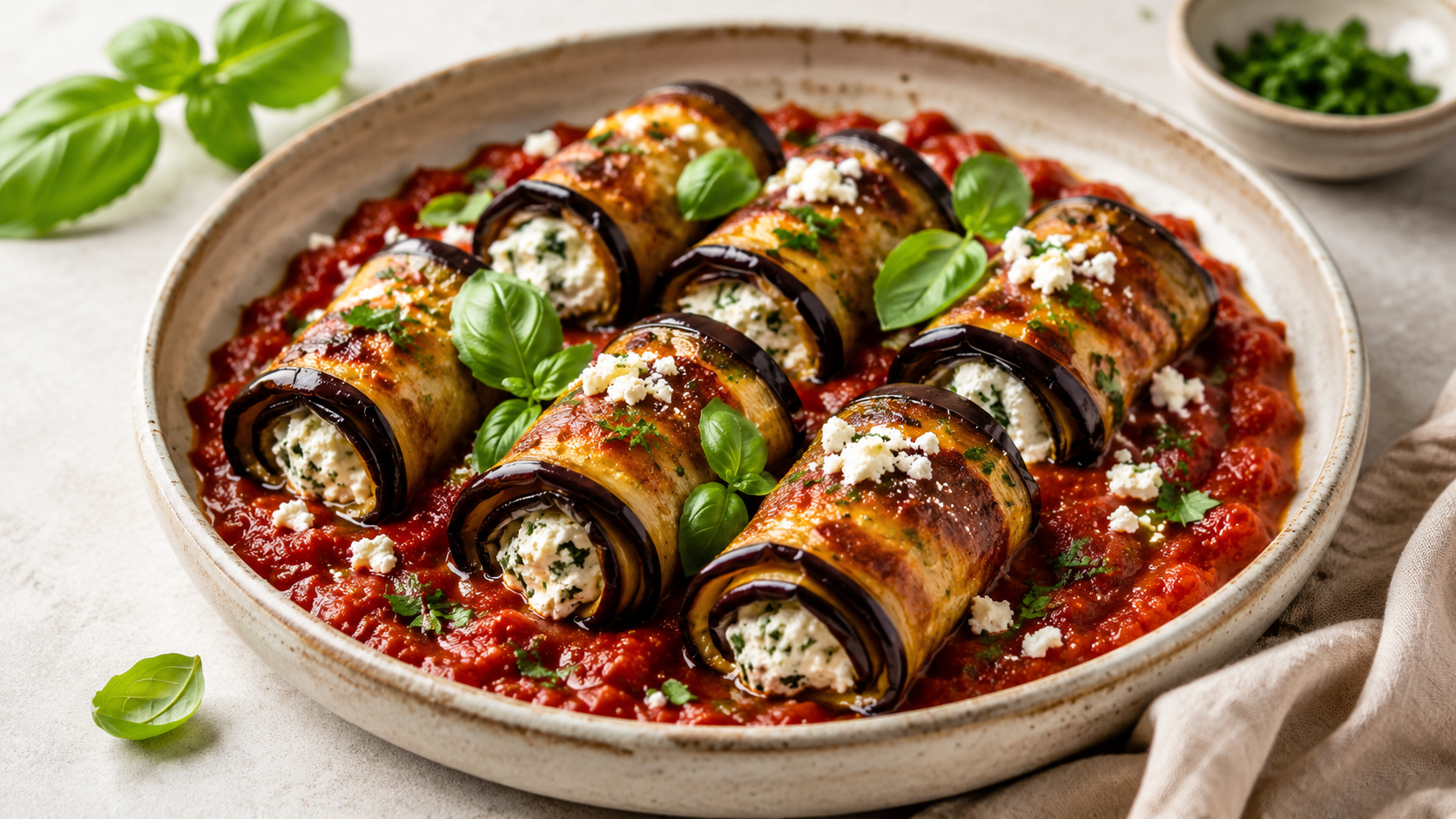
These stuffed aubergine rolls are proof that healthy, meat-free food can be genuinely elegant. Slices of aubergine are grilled until tender, then rolled around a herby ricotta and spinach filling and baked in a rich tomato sauce. The result is a beautiful, satisfying vegetarian dinner delivering 8g of fibre for around 320 calories — special enough for guests, yet squarely on-plan for a GLP-1.
A quick word first: I am not a doctor or a dietitian, just someone who lived this. None of these foods or supplements are medication, and if you are on a GLP-1, check anything new with your GP or pharmacist. Right, let us get to it.
For more evening ideas, see my high-protein dinner ideas, and for meat-free protein, how much protein per day.
Why aubergine makes a brilliant low-carb base
Aubergine is one of the most useful vegetables for eating well, and these rolls make the most of it.
A low-calorie, low-carb vehicle. Grilled aubergine slices make a lovely tender wrap for the filling in place of pasta, keeping this naturally low in carbs and calories.
Ricotta and spinach bring protein and iron. The creamy ricotta filling adds protein and calcium, while the spinach brings iron and fibre — a genuinely nourishing combination.
It feels special without being fiddly. These look and taste elegant enough for a dinner party, yet they are straightforward to make and fit a weight-loss plan easily.
Why healthy food deserves to feel special sometimes
There is a tendency, when you are trying to lose weight, to treat all your food as purely functional — fuel to be got through rather than enjoyed. I understand the impulse, but I think it is a mistake, because it makes eating well feel like a chore, and chores get abandoned. Making the effort occasionally to cook something that feels genuinely special, that you would be proud to serve to guests, is important for keeping a long-term healthy diet enjoyable rather than joyless. These stuffed aubergine rolls are exactly that kind of dish — they look beautiful, they taste sophisticated, and yet they are completely on-plan.
This matters more than it might seem. Part of what derails people on diets is the feeling that they can never have anything nice, that healthy eating means an endless parade of grilled chicken and steamed broccoli. When you prove to yourself that you can cook something elegant, restaurant-worthy and genuinely impressive that also happens to be good for you, it reframes the whole endeavour. Suddenly healthy eating is not a limitation but a different, and often more interesting, way of cooking. These rolls are a lovely thing to make when you have people over, or just when you fancy treating yourself to something a bit special on a normal evening. Do not let your healthy cooking become purely utilitarian — build in dishes like this that remind you eating well can be a pleasure, not just a discipline. That balance is what makes it sustainable for life.
The macros that matter
Here is roughly what one serving gives you. Treat these as a guide rather than gospel, since it depends on your exact ingredients and portions:
| Approx per serving | Amount |
|---|---|
| Calories | ~320 kcal |
| Protein | 14g |
| Carbohydrate | 22g |
| Fat | 18g |
| Fibre | 8g |
The protein figure is the one I watch on a GLP-1. As a rough guide I aim for somewhere around 1.2 to 1.6g of protein per kilo of body weight across the day to protect muscle while losing fat, and I judge every meal by how much of that it contributes. I log meals like this in Cronometer (it is free) so I know I am actually hitting my targets rather than hoping. The first time I tracked properly I realised I was eating far less protein than I thought, so if you have never done it, give it two weeks.
What you need (serves 1)
- 1 large aubergine, sliced lengthways into thin strips
- 150g ricotta
- 2 big handfuls of spinach, wilted and chopped
- 1 clove garlic, crushed
- Zest of ½ lemon
- 2 tbsp grated parmesan
- 1 tin chopped tomatoes
- 1 tsp dried oregano
- 1 tsp olive oil
- Fresh basil
- Salt and black pepper
How to make it
- Heat the grill or a griddle pan. Brush the aubergine slices lightly with olive oil and grill until tender and pliable, a couple of minutes each side. Set aside.
- Make a quick tomato sauce: simmer the chopped tomatoes with the oregano, a little garlic and seasoning for 10 minutes, then spread over the base of an oven dish.
- Mix the ricotta with the wilted chopped spinach, garlic, lemon zest, half the parmesan, salt and pepper.
- Put a spoonful of the ricotta mixture at the end of each aubergine slice and roll it up.
- Sit the rolls seam-side down in the tomato sauce, scatter with the remaining parmesan.
- Bake at 190C for 20–25 minutes until bubbling and golden.
- Scatter with fresh basil and serve.
Adjusting it to your goals
At 14g this is a lighter, elegant dinner, so on a hungrier day:
Boost the protein. Add more ricotta or parmesan, mix some cooked lentils into the filling, or serve with a side of chicken.
Add a side. A big green salad or some beans alongside adds fibre and makes it more filling.
Bulk the sauce. Stir extra veg into the tomato sauce for more fibre. See fibre on GLP-1.
Using vegetables as a base instead of pasta
One of the most useful ideas in low-carb, weight-friendly cooking is learning to use vegetables in place of starchy carbs as the base or vehicle of a dish, and aubergine is one of the best for it. Here, grilled aubergine slices do the job that pasta sheets would in a cannelloni or a lasagne — wrapping and holding the filling — but for a fraction of the calories and carbs, while adding fibre and nutrients of their own. This principle opens up a whole world of lighter versions of classic dishes. Courgette ribbons or slices stand in for pasta in lasagne or as courgetti spaghetti. Cauliflower becomes rice, or a pizza base, or mash. Lettuce leaves become taco shells or wraps. Sweet potato or aubergine slices become the base for stacks and bakes. Portobello mushrooms become burger buns or pizza bases. In each case you are swapping a refined, calorie-dense carb for a nutrient-rich vegetable, keeping the shape and function of the dish while transforming its nutrition. It is not about pretending vegetables are exactly the same as pasta — they are not, and that is fine — but about discovering that many dishes work brilliantly, and often taste fresher and lighter, when a vegetable takes the starring structural role. On a GLP-1, where keeping calories sensible while staying satisfied is the goal, mastering these vegetable-for-carb swaps is genuinely one of the most useful tricks you can learn, and dishes like these aubergine rolls show just how elegant the results can be.
Assemble ahead, bake fresh
These are a great prep-ahead dish for entertaining or a special dinner. You can grill the aubergine and assemble the rolls in their sauce ahead of time, keep them in the fridge, and simply bake when you are ready. They also keep well for a couple of days once cooked and reheat nicely, making a lovely next-day high-protein lunch. An elegant addition to my meal prep ideas for Mounjaro repertoire.
How it fits a full day of eating
At 14g of protein this is a lighter, more elegant dinner, so I make sure the rest of my day carries more protein — a solid high-protein breakfasts and high-protein lunch. The ricotta and parmesan give it a respectable protein base for a vegetable dish.
Bulk it up with lentils in the filling, extra cheese, or a side of chicken for a higher-protein meal, and a protein shake covers any gap. Being naturally low-carb, it suits an evening where I have had carbs earlier. As always, it is the daily total that counts — my complete GLP-1 guide explains how I balance it.
No appetite today?
Soft, saucy and gentle, these rolls are fairly manageable on a low-appetite evening, and even one or two deliver protein and veg without being heavy. They do take some effort to make, though, so a pre-assembled batch or a simpler option may suit a really rough day. When cooking is beyond you, HelloFresh keeps proper meals coming. More in what to eat with no appetite.
Supplements that pair well
As a plant-forward dinner it is low in omega-3, so I add Super Omega-3 EPA, and the ricotta and parmesan add gut-friendly dairy that a probiotic like Pre + Pro 15 builds on. A daily Super Supplemental covers general gaps. The free Lily & Loaf lifestyle analysis matches a routine to your goals.
Frequently asked questions
Are stuffed aubergine rolls filling enough for dinner?
As a lighter, elegant dinner, yes, especially with the ricotta filling. For a hungrier day, add lentils to the filling, extra cheese, or a side of chicken or a big salad to make it more substantial.
How do I stop the aubergine being bitter or oily?
Modern aubergines are rarely bitter, so no need to salt them first. To avoid oiliness, brush the slices lightly with oil and grill rather than fry them — grilling uses far less oil and gives a lovely flavour.
Can I make it vegan?
Yes — swap the ricotta for a plant-based ricotta or a blended silken tofu with lemon and herbs, and use nutritional yeast in place of parmesan. The aubergine and tomato base are naturally vegan.
Can I prepare them in advance?
Yes — grill the aubergine and assemble the rolls in their sauce ahead, then refrigerate and bake when ready. That makes them ideal for entertaining, as most of the work is done in advance.
What can I serve with them?
A big green salad keeps it light and low-carb, or add some beans, lentils or a little crusty bread for a more filling meal. A side of chicken or fish turns it into a higher-protein dinner.
The bottom line
Stuffed aubergine rolls prove healthy, meat-free food can be genuinely elegant — tender aubergine wrapped around a herby ricotta filling and baked in rich tomato sauce, for around 320 calories with 8g of fibre. Building in dishes that feel special reminds you eating well is a pleasure, not just a discipline, and using vegetables in place of pasta is one of the most useful low-carb tricks going. Add lentils or a side of chicken for more protein. To match your supplements to a plant-forward routine, the free Lily & Loaf lifestyle analysis is a quick, no-pressure check.
The tools I lean on
If you are putting a GLP-1 routine together, this is the order I would do it in, free tools first:
- Track a fortnight of food in Cronometer so you can see your real protein and calories.
- Take the free Lily & Loaf lifestyle analysis to find the supplements actually worth buying.
- Start an Audible trial for something to listen to while you cook or walk.
- Keep HelloFresh on standby for the weeks cooking from scratch just is not happening.
- Batch-cook and freeze portions in a set of freezer-safe containers so there is always a healthy dinner a few minutes away.
A bit about me
I am Alan Spicer. I lost around seven stone on Mounjaro and filmed the whole thing, warts and all, on my YouTube channel. Simple, protein-first dinners like this were a real part of how I held onto muscle and kept the weight off.
This article shares my personal experience and general information only. It is not medical advice. Food and supplements support a balanced diet and healthy lifestyle and do not replace it or any treatment prescribed by your doctor. Speak to your GP or pharmacist before making changes, especially while on a GLP-1 medication. Nutrition figures are approximate and will vary with the exact ingredients and brands you use.
Inspired by the kind of fresh, wholefood dinners in the Lily & Loaf evening meals collection. This is my own version, written from my own kitchen.
Discover more from Healthy Weight Loss GLP1
Subscribe to get the latest posts sent to your email.