

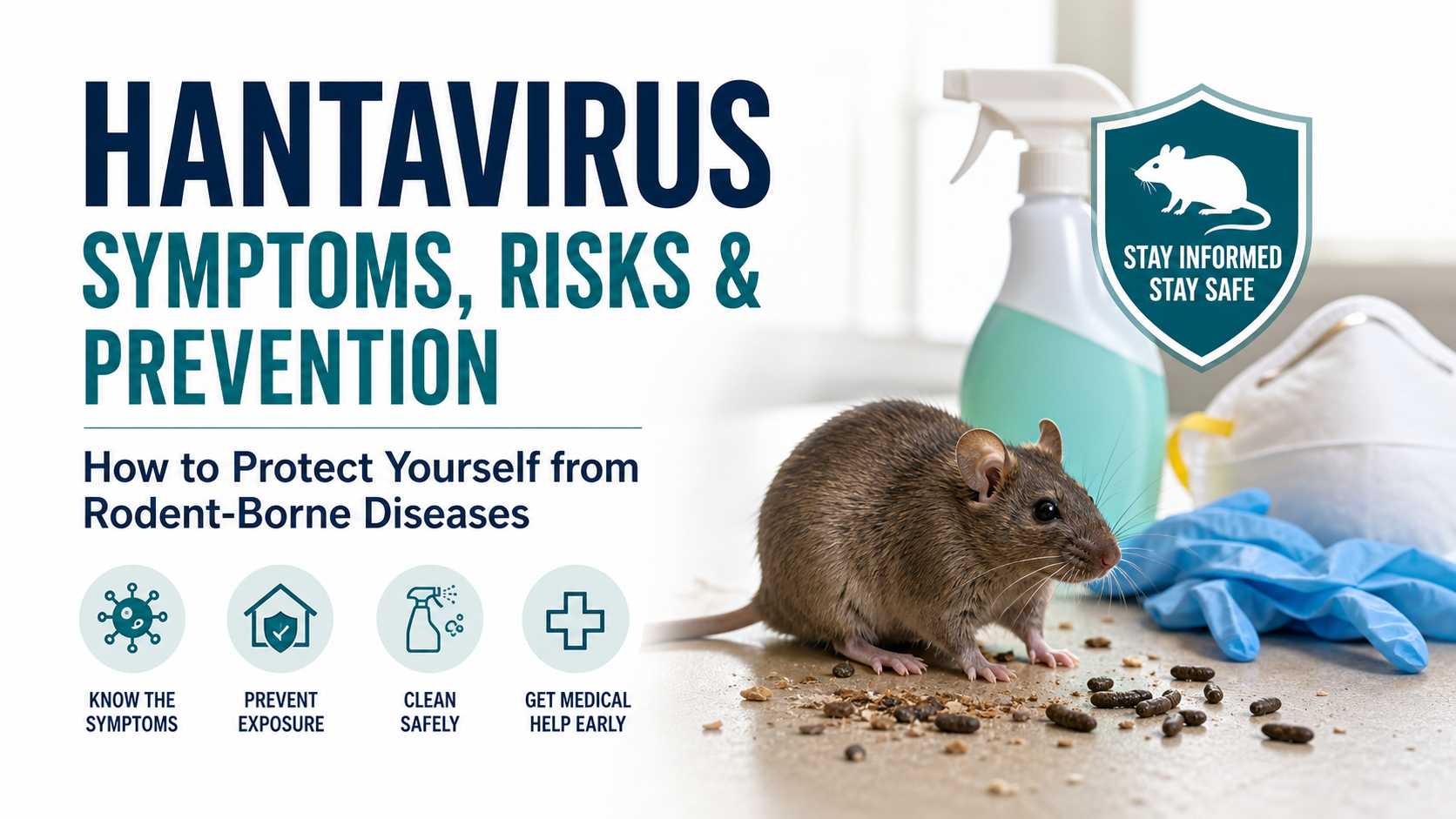
Hantavirus Symptoms, Travel Illness Risks and Rodent-Borne Disease Stats: How to Protect Yourself
Hantavirus is a rare but serious rodent-borne virus that can spread to humans through contact with infected rodent urine, droppings, saliva, nesting material, or contaminated dust. The most important protection is not a supplement, detox, or “immune hack”. It is safe cleaning, rodent control, avoiding contaminated dust, travel hygiene, and getting medical help quickly if symptoms appear after exposure.
This matters because hantavirus sits inside a much bigger public-health story: rodents can spread dozens of diseases, holiday stomach bugs are common, cruise ships regularly report gastrointestinal outbreaks, and zoonotic infections — diseases that pass between animals and humans — are a major source of emerging infectious disease risk.
For most UK readers, hantavirus itself remains rare. But rodent exposure is not rare. Mouse droppings in a shed, rat urine in a garage, contaminated insulation in a loft, food waste near bins, or rodent nests in a holiday cabin can all create a real-world exposure risk. The sensible response is not panic. It is practical prevention.
Quick answer: how do you protect yourself from hantavirus?
To protect yourself from hantavirus, avoid contact with rodents and rodent waste, do not sweep or vacuum droppings, ventilate enclosed spaces, soak droppings and nests with disinfectant before cleaning, wear gloves, seal entry points, store food securely, and seek urgent medical help if flu-like symptoms or breathing problems appear after rodent exposure.
The key mistake is dry cleaning. Sweeping, vacuuming, or blasting rodent-contaminated areas before disinfecting can push infectious particles into the air.
Why hantavirus is in the news
Hantavirus has recently attracted renewed attention after high-profile reports of severe illness linked to rodent exposure, including international coverage of the death of Betsy Arakawa, wife of actor Gene Hackman, from hantavirus pulmonary syndrome in 2025.
In May 2026, Sky News and The Straits Times reported a serious respiratory illness outbreak on the MV Hondius cruise ship travelling from Ushuaia, Argentina, towards Cape Verde, with at least one confirmed hantavirus case reported and multiple suspected cases under investigation. Because early reports can change quickly, readers should treat breaking-news details as developing and rely on public-health agencies for confirmed guidance.
- Sky News: MV Hondius outbreak report
- The Straits Times / AFP: severe respiratory illness outbreak report
- AP News: what is hantavirus?
- Washington Post: hantavirus and Betsy Arakawa coverage
The important lesson is not “be scared of cruise ships” or “be scared of mice”. It is that rare infections can become serious when exposure history is missed. If you have been around rodent droppings, nests, dusty sheds, garages, cabins, barns, pet rodents, or contaminated holiday accommodation, tell the doctor if you later become ill.
Key statistics: hantavirus, travel illness, cruise ships and rodent diseases
These are the headline statistics worth making easy for journalists, bloggers, and AI answer engines to quote.
| Statistic | What it means | Source |
|---|---|---|
| 890 US hantavirus cases from 1993 to end of 2023 | Hantavirus is rare, but surveillance-confirmed cases do occur every year. | CDC |
| 35% of US reported hantavirus infections resulted in death | Rare does not mean harmless. Hantavirus has a high fatality burden among confirmed cases. | CDC |
| 38% of people who develop HPS respiratory symptoms may die | Hantavirus pulmonary syndrome is a severe lung illness and needs urgent care. | CDC |
| 1 to 8 weeks incubation for HPS symptoms | Symptoms may appear long after a shed, garage, cabin, or rodent cleanup exposure. | CDC |
| 1,885 EU/EEA hantavirus cases reported in 2023 | European hantavirus infection is monitored and remains relevant to public health. | ECDC |
| Rodents spread more than 35 diseases | Rodent risk is broader than hantavirus alone. | US EPA |
| More than 6 in 10 known human infectious diseases can spread from animals | Zoonotic disease is a major public-health category, not a fringe concern. | CDC One Health |
| 3 in 4 new or emerging human infectious diseases come from animals | Animal-to-human spillover is central to future infectious-disease risk. | CDC One Health |
| Traveller’s diarrhoea affects 30% to 70% of travellers during a two-week period | Holiday illness is far more common than hantavirus, especially food and water illness. | CDC Yellow Book |
| Gastrointestinal infections were 65% of reported travel-associated infections in England in 2024 | Gut infections dominate reported travel illness in England. | UKHSA |
| Over 1,000 confirmed and possible Cabo Verde travel-associated GI infection cases by March 2026 | Food and water illness can become a major holiday-health issue. | ECDC |
| 18 CDC-posted cruise ship GI outbreaks in 2024 | Cruise outbreaks are monitored when they meet CDC Vessel Sanitation Program criteria. | CDC VSP |
| 23 CDC-posted cruise ship GI outbreaks in 2025 | 2025 had more CDC-posted cruise GI outbreaks than 2024. | CDC VSP |
| About 1 million leptospirosis cases and nearly 60,000 deaths globally each year | Leptospirosis is another serious rodent-associated infection, often linked to contaminated water or soil. | CDC |
| Average of 7 human plague cases per year in the US | Plague still exists, but modern US cases are rare. | CDC |
What is hantavirus?
Hantaviruses are a family of viruses carried by certain rodents. Humans can become infected when they breathe in particles from contaminated rodent urine, droppings, saliva, or nesting material. Infection can also happen through direct contact with contaminated material, contact with broken skin, touching the eyes, nose, or mouth after contact with contamination, or, more rarely, a bite or scratch from an infected rodent.
Different hantaviruses are associated with different types of illness. In the Americas, some hantaviruses can cause hantavirus pulmonary syndrome, often shortened to HPS, which mainly affects the lungs. In Europe and Asia, hantaviruses are more commonly associated with haemorrhagic fever with renal syndrome, or HFRS, which can affect the kidneys.
Useful official references include the CDC hantavirus overview, the CDC hantavirus prevention guidance, the GOV.UK hantaviruses guidance, and the ECDC hantavirus annual epidemiological report.
Hantavirus symptoms: what to watch for
Hantavirus symptoms can vary depending on the strain and the type of illness. Some early symptoms can look like flu, food poisoning, dehydration, or a general viral illness, which is why exposure history matters.
Early symptoms may include:
- Fever
- Fatigue or extreme tiredness
- Muscle aches, especially in large muscle groups
- Headache
- Dizziness or chills
- Nausea, vomiting, diarrhoea, or abdominal pain
- Back or abdominal pain in kidney-affecting forms
Warning signs that need urgent medical help
- Shortness of breath
- Coughing after a flu-like start
- Chest tightness
- Sudden worsening after a few days of symptoms
- Low urine output or signs of kidney problems
- Severe weakness, collapse, confusion, or blue lips
Important: If symptoms appear after cleaning a shed, loft, garage, barn, cabin, vehicle, holiday rental, cruise cabin, or any area with rodent droppings, tell the doctor or emergency team about that exposure. That single detail can help them assess the risk more quickly.
How does hantavirus spread?
Hantavirus is usually linked to rodents, not normal everyday social contact. The highest-risk scenario is disturbing dried rodent urine, droppings, saliva, or nesting material and breathing in contaminated dust.
Higher-risk situations include:
- Sweeping or vacuuming rodent droppings
- Cleaning a dusty shed, loft, garage, barn, cabin, or storage space
- Opening a building that has been unused for a long time
- Finding rodent nests in vehicles, air vents, cupboards, or insulation
- Handling wild rodents or contaminated bedding
- Living or working in places with ongoing rodent infestation
- Sleeping in accommodation where rodent activity is visible
- Touching contaminated surfaces and then touching your mouth, nose, or eyes
The big mistake is dry cleaning. Sweeping, vacuuming, or using a pressure washer before disinfecting can push contaminated particles into the air. That is exactly what you want to avoid.
Holiday illness and cruise ship illness: why this belongs on a health site
Hantavirus is rare, but the bigger lesson is very relevant to everyday health: travel exposes people to new environments, new hygiene standards, shared spaces, food and water risks, pests, and infections they may not normally encounter at home.
According to CDC Yellow Book guidance, traveller’s diarrhoea is the most predictable travel-related illness, with attack rates ranging from 30% to 70% during a two-week period depending on destination and season. CDC also notes that bacteria account for an estimated 75% to 90% of traveller’s diarrhoea cases, while viruses account for at least 10% to 25%.
UKHSA’s travel-associated infections report found that gastrointestinal infections were the most common reported travel-associated infection type in England in 2024, making up 65% of reports. Over the three-year period from 2022 to 2024, travel-associated GI infection reports in England increased by 64%.
In March 2026, ECDC reported over 1,000 confirmed and possible cases of shigellosis and other gastrointestinal infections in travellers returning from Cabo Verde to EU/EEA countries, the UK, and the US. The outbreak included 766 confirmed and possible shigellosis cases and over 300 other gastrointestinal infection cases such as salmonellosis, campylobacteriosis, giardiasis, cryptosporidiosis, yersiniosis, amoebiasis, and some E. coli infections.
Cruise ship illness stats
Cruise ships are not uniquely “dirty”, but they are enclosed environments with shared dining, shared surfaces, high passenger turnover, and close-contact settings. CDC’s Vessel Sanitation Program posts gastrointestinal illness outbreaks when a ship is under VSP jurisdiction and 3% or more of passengers or crew report GI symptoms to the ship’s medical staff.
| Year | CDC-posted cruise GI outbreaks | Notable detail |
|---|---|---|
| 2023 | 14 | CDC table lists norovirus as the causative agent for most posted outbreaks. |
| 2024 | 18 | From the CDC table, posted 2024 outbreaks involved 2,041 reported passenger cases and 284 crew cases, based on listed case counts. |
| 2025 | 23 | CDC’s earlier outbreak table lists 23 posted 2025 outbreaks, mostly norovirus. |
| 2026 | 3 as of 23 April 2026 | CDC listed E. coli and norovirus among the causative agents for 2026 posted outbreaks at that point. |
This is why health preparation matters before travel. For readers on GLP-1 medication, diarrhoea, vomiting, poor appetite, dehydration, and electrolyte loss can feel even worse because reduced hunger and thirst already make hydration and nutrition harder. For practical support, read our guides on hydration and electrolytes on GLP-1, diarrhoea on GLP-1, and getting enough protein on GLP-1.
Rodent-to-human diseases: hantavirus is only one part of the picture
Rodents can spread disease directly and indirectly. Direct transmission can happen through contact with rodents, bites, scratches, urine, droppings, saliva, nesting material, or contaminated dust. Indirect transmission can happen through fleas, ticks, mites, contaminated food, contaminated water, or environments where rodents have been active.
UK government guidance on pet rodents states that all rodents, pet and wild, can carry bacteria and viruses that cause infections in people. It specifically lists leptospirosis, hantavirus, rat-bite fever, and lymphocytic choriomeningitis virus as examples of rodent infections that can transmit to humans.
| Disease | Typical link to rodents | Important statistic or fact |
|---|---|---|
| Hantavirus | Breathing contaminated dust from rodent urine, droppings, saliva, or nesting material | CDC reports 890 US cases from 1993 to end of 2023, with 35% resulting in death. |
| Leptospirosis | Contact with urine from infected animals, often through contaminated water or soil | CDC estimates about 1 million human cases globally each year and nearly 60,000 deaths. |
| Rat-bite fever | Rat bites, scratches, handling infected rats, or contaminated food/water | CDC has reported a 7% to 10% case-fatality rate among untreated patients. |
| LCMV | Exposure to fresh rodent urine, droppings, saliva, nesting material, or bites | Especially important for pregnant people because infection can pass to the unborn baby. |
| Plague | Infected fleas, infected animals, or respiratory droplets in pneumonic plague | CDC reports an average of 7 human plague cases per year in the US in recent decades. |
| Salmonella and other GI infections | Food, surfaces, water, or environments contaminated by animals or poor hygiene | Common in travel-associated illness and holiday outbreaks. |
Hantavirus vs plague: which is worse?
Hantavirus and plague are both serious, but they are different diseases. Hantavirus is viral and usually linked to inhaling contaminated rodent dust. Plague is bacterial, caused by Yersinia pestis, and is usually linked to infected fleas, infected animals, or respiratory droplets in pneumonic plague.
| Comparison | Hantavirus | Plague |
|---|---|---|
| Type | Virus | Bacteria |
| Main animal link | Rodents such as mice and rats | Small mammals, rodents, and fleas |
| Common route to humans | Breathing contaminated rodent dust; contact with urine, droppings, saliva, or nesting material | Flea bites, contact with infected tissues, or inhaling droplets in pneumonic plague |
| US frequency | 890 reported cases from 1993 to end of 2023 | Average of 7 human cases per year in recent decades |
| Fatality statistic | 35% of reported US cases resulted in death; CDC says 38% of people who develop HPS respiratory symptoms may die | WHO says untreated bubonic plague has a 30% to 60% case-fatality ratio and untreated pneumonic plague is always fatal |
| Treatment | No specific cure; supportive hospital care is critical | Antibiotics are effective when given early |
| Practical prevention | Rodent control, safe cleaning, disinfecting droppings, avoiding contaminated dust | Rodent control, flea control, avoiding sick/dead animals, early medical care |
The key takeaway: plague has the more infamous history, but hantavirus can be extremely dangerous because early symptoms may look ordinary and there is no specific antiviral cure. With both diseases, exposure history and early medical care matter.
How to clean up rodent droppings safely
This is the most important practical section. If there is one thing to remember, it is this: wet first, clean second.
Step-by-step safe cleaning checklist
- Ventilate first. Open doors and windows for around 30 minutes before cleaning enclosed spaces such as sheds, garages, cabins, barns, and storage areas. Leave the area while it airs out.
- Wear gloves. Use rubber, plastic, latex, vinyl, or nitrile gloves.
- Do not sweep or vacuum. Dry cleaning can push contaminated particles into the air.
- Soak droppings and nests. Spray droppings, urine, nests, dead rodents, and surrounding surfaces with household disinfectant or a bleach solution until very wet.
- Wait. Leave the disinfectant to work for at least five minutes, or follow the product label.
- Wipe up with paper towels. Dispose of used towels in a covered bin or double bag where appropriate.
- Clean the wider area. Mop floors and disinfect hard surfaces such as shelves, drawers, cupboards, worktops, and storage boxes.
- Wash gloves, then hands. Wash gloved hands before removing gloves, then wash bare hands thoroughly with soap and warm water.
- Escalate heavy infestations. If there is a large infestation, contaminated insulation, rodent access to ventilation systems, or repeated activity, use a professional pest control service.
For official cleaning guidance, see the CDC guide to cleaning up after rodents.
Recommended protection kit for rodent cleanup and prevention
The best products are practical rather than glamorous: gloves, disinfectant, paper towels, bin bags, masks for dusty or higher-risk spaces, and rodent-proofing materials to stop the problem returning.
| Item | Why it helps | Amazon UK affiliate link |
|---|---|---|
| FFP3 respirator masks | Useful for dusty, enclosed, or higher-risk cleanup situations. Heavy infestations may need professional PPE and fit-tested respirators. | View FFP3 masks on Amazon UK |
| Nitrile disposable gloves | Protects hands when disinfecting, wiping up droppings, handling waste, and cleaning contaminated surfaces. | View nitrile gloves on Amazon UK |
| Disinfectant wipes or spray | Helps wet and disinfect droppings, nests, and hard surfaces before wiping. Look for products clearly labelled disinfectant. | View disinfectant wipes on Amazon UK |
| Disposable coveralls | Useful for dirty sheds, lofts, garages, barns, or cleanup jobs where clothing may become contaminated. | View disposable coveralls on Amazon UK |
| Heavy-duty bin bags | Useful for bagging contaminated paper towels, nests, damaged cardboard, and disposable PPE. | View heavy-duty bin bags on Amazon UK |
| Rodent-proof wire wool or mesh | Helps block small gaps around pipes, vents, cupboards, sheds, and garages once the area is cleaned. | View rodent proofing mesh on Amazon UK |
| Mouse traps | Helps reduce active infestation. Use traps safely and follow local pest-control guidance. | View mouse traps on Amazon UK |
| Airtight food storage boxes | Reduces food sources that attract rodents into cupboards, garages, kitchens, and utility rooms. | View airtight storage boxes on Amazon UK |
Important safety note: If you find a major infestation, contaminated insulation, dead rodents in air ducts, or evidence of rodents in ventilation systems, do not try to turn it into a DIY weekend project. Bring in a qualified pest control or cleanup professional.
Lily & Loaf wellness support picks
No supplement prevents, treats, or cures hantavirus, plague, traveller’s diarrhoea, norovirus, salmonella, or any other infection. The protective steps are environmental and behavioural: avoid exposure, clean properly, wash hands, control rodents, stay hydrated, and get medical care quickly if symptoms become serious.
That said, a sensible daily wellness routine can support normal immune function, hydration, and general wellbeing. This is the safe way to include Lily & Loaf products without making medical claims.
| Product | Best angle | Affiliate link |
|---|---|---|
| Antiox-Immune | Best overall Lily & Loaf fit for this article. Contains vitamin C, zinc, selenium, grape seed, and antioxidant-focused ingredients to support normal immune function and cell protection. | View Antiox-Immune |
| Vitamin D3 + K2 4000IU | Good UK winter and low-sunlight angle. Vitamin D contributes to normal immune function, muscle function, bones, and teeth. K2 supports calcium use in the body. | View Vitamin D3 + K2 |
| Zinc | Simple immune-support product. Zinc contributes to normal immune system function and cell protection. | View Zinc |
| Electrolyte Drink | Useful broader wellness bridge for hydration, especially for readers already focused on GLP-1 weight loss, low appetite, fatigue, diarrhoea, and daily health routines. | View Electrolyte Drink |
Protection from hantavirus comes from avoiding rodent exposure. Recovery from serious infection needs medical care. Supplements are not a shield against viruses, but daily nutrition and hydration still support normal health.
Where this connects to GLP-1 weight loss and HealthyWeightLossGLP1
This article is not about using GLP-1 medication to treat infection. It is about real-world health protection while losing weight, travelling, eating less, and managing side effects.
If you are on Mounjaro, Wegovy, Ozempic, or another GLP-1 medication, illness can hit differently. Vomiting, diarrhoea, low appetite, dehydration, fatigue, and reduced protein intake can quickly derail your routine. That is why practical preparation matters.
- For dehydration and electrolyte support, read: Hydration & Electrolytes on GLP-1
- For gut upset and recovery foods, read: Diarrhoea on GLP-1: What Actually Helps
- For keeping protein up when appetite is low, read: How to Get Enough Protein on GLP-1
- For simple movement while rebuilding health, read: Best Low Impact Exercise for Weight Loss UK
- For Alan’s lived-experience context, read: My First 12 Months on Mounjaro
- For food-first weight loss structure, read: What to Eat on Mounjaro
People Also Ask: hantavirus, rodent disease and holiday illness
Can you get hantavirus from mouse droppings?
Yes. People can become infected if they breathe in dust contaminated with infected rodent urine, droppings, saliva, or nesting material. Do not sweep or vacuum droppings. Wet them with disinfectant first, then wipe them up safely.
How common is hantavirus?
Hantavirus is rare, but serious. CDC reports 890 US hantavirus cases from 1993 to the end of 2023. In Europe, ECDC reported 1,885 EU/EEA cases in 2023.
How deadly is hantavirus?
CDC reports that 35% of reported US hantavirus infections resulted in death. For hantavirus pulmonary syndrome, CDC says 38% of people who develop respiratory symptoms may die from the disease.
How long after exposure do hantavirus symptoms start?
HPS symptoms usually start 1 to 8 weeks after contact with an infected rodent. HFRS symptoms usually develop within 1 to 2 weeks, but can take up to 8 weeks in rare cases.
Can hantavirus spread between people?
Most hantaviruses are linked to rodent exposure rather than person-to-person spread. Some rare strains, such as Andes virus, have been associated with person-to-person transmission, but this is not the usual route for most hantavirus infections.
Should I vacuum mouse droppings?
No. Do not vacuum or sweep rodent droppings before disinfecting. Spray the area until soaked with disinfectant, wait at least five minutes or follow the label, then wipe up with paper towels.
What diseases can rodents spread to humans?
Rodents can spread more than 35 diseases directly or indirectly. Examples include hantavirus, leptospirosis, rat-bite fever, lymphocytic choriomeningitis virus, salmonella-related illness, and plague.
Is hantavirus worse than plague?
They are different. Hantavirus is viral and has no specific cure, while plague is bacterial and can be treated with antibiotics when caught early. Both can be fatal. CDC reports 38% mortality among people who develop HPS respiratory symptoms, while WHO says untreated bubonic plague has a 30% to 60% case-fatality ratio.
What is the most common holiday illness?
Traveller’s diarrhoea is one of the most predictable travel-related illnesses. CDC reports attack rates of 30% to 70% of travellers during a two-week period, depending on destination and season.
Why do people get sick on cruise ships?
Cruise ships bring together large numbers of people in shared environments. Illness can spread through contaminated food or water, shared surfaces, person-to-person contact, and close living conditions.
Does hand sanitiser stop norovirus?
Hand sanitiser can help reduce some germs, but washing hands thoroughly with soap and water is especially important for gastrointestinal illness prevention, particularly after using the toilet and before eating.
Can supplements prevent hantavirus?
No. Supplements do not prevent, treat, or cure hantavirus. Protection comes from avoiding rodent exposure, cleaning safely, controlling rodents, and seeking medical care quickly if symptoms appear after exposure.
What should I do if I cleaned mouse droppings and now feel ill?
Contact a healthcare provider urgently if you develop fever, severe fatigue, muscle aches, coughing, shortness of breath, chest tightness, or kidney symptoms after rodent exposure. Tell them clearly that you cleaned or disturbed rodent droppings.
Are pet rodents a risk?
Pet rodents are usually low risk when handled hygienically, but UK government guidance says pet and wild rodents can carry bacteria and viruses that cause infections in people. Wash hands after handling rodents or cages, and pregnant people should take extra care.
What is the safest way to prevent rodent-borne disease at home?
Seal gaps, remove food sources, store food and pet food in sealed containers, keep bins secure, reduce clutter, use traps where appropriate, call pest control for infestations, and clean any droppings using wet disinfection methods.

FAQs about hantavirus and rodent-borne disease
What is hantavirus in simple terms?
Hantavirus is a family of viruses carried by certain rodents. People usually become infected by breathing in dust contaminated with infected rodent urine, droppings, saliva, or nesting material.
Can hantavirus spread from person to person?
Most hantavirus infections are linked to rodent exposure, not person-to-person spread. Some rare strains, such as Andes virus, have shown person-to-person transmission, but this is not the usual route.
What are the first symptoms of hantavirus?
Early symptoms can include fever, fatigue, muscle aches, headache, chills, dizziness, nausea, vomiting, diarrhoea, or abdominal pain. Later symptoms can include coughing, shortness of breath, and chest tightness.
Is hantavirus common in the UK?
Symptomatic hantavirus infection is uncommon in the UK, but rodent-associated infections can occur. The practical advice remains the same: avoid contact with rodent waste and clean contaminated areas safely.
Can I get hantavirus from old mouse droppings?
Risk depends on whether the droppings were contaminated and whether infectious particles become airborne or enter the body. Treat rodent droppings as potentially infectious and avoid sweeping or vacuuming them dry.
Should I wear a mask when cleaning mouse droppings?
For dusty, enclosed, or higher-risk areas, suitable respiratory protection may be sensible. For heavy infestations, contaminated insulation, or ventilation contamination, use a professional pest control or cleanup service.
Can disinfectant kill hantavirus?
CDC recommends soaking rodent urine, droppings, and contaminated surfaces with disinfectant before wiping them up. Always follow the disinfectant label and allow enough contact time.
Can supplements protect me from hantavirus?
No. Supplements do not prevent, treat, or cure hantavirus. Good nutrition can support normal health, but it does not replace exposure prevention or medical care.
What should I buy to clean up rodent droppings safely?
A basic cleanup kit includes disposable gloves, disinfectant or bleach solution, paper towels, heavy-duty bin bags, hand soap, and rodent-proofing materials. For higher-risk spaces, consider disposable coveralls and suitable respiratory protection.
When should I call pest control?
Call pest control if there is a heavy infestation, recurring droppings, dead rodents, contaminated insulation, rodent access to ventilation systems, or if you feel unsafe cleaning the area yourself.
What should I do if I vacuumed mouse droppings by mistake?
Stop cleaning, ventilate the area, leave while it airs out, then follow safe disinfection guidance. If you develop symptoms after possible exposure, contact a healthcare provider and explain what happened.
Why compare hantavirus with cruise ship illness?
They are different problems, but both show how environment matters. Cruise outbreaks are usually gastrointestinal and spread through food, water, surfaces, or close contact. Hantavirus is usually linked to rodent exposure. Both reward prevention, hygiene, and early action.
Why compare hantavirus with plague?
Both can be linked to rodents and both can be fatal, but plague is bacterial and treatable with antibiotics when caught early, while hantavirus is viral and usually managed with supportive hospital care.
Is it safe to go on holiday if there are illness reports?
Check official travel health advice before you go, follow food and water hygiene guidance, take travel insurance, and be extra cautious if you are older, pregnant, immunocompromised, diabetic, dehydrated, or managing medication side effects.
What is the biggest practical lesson?
Do not ignore exposure history. If you become ill after rodent contact, travel, cruise illness, contaminated water, or a suspected foodborne outbreak, tell the healthcare provider exactly what happened.
Final word
Hantavirus is rare, but serious. Travel stomach bugs are common, but usually preventable. Rodent-borne diseases are not ancient history. Plague still exists. Leptospirosis still causes major global illness. Cruise outbreaks still happen. The thread connecting all of this is simple: your environment matters.
For a health and weight-loss audience, the message is not fear. It is preparation. Wash your hands. Store food properly. Seal gaps. Disinfect before cleaning rodent waste. Hydrate when ill. Do not push through warning symptoms. Tell doctors about exposure history. Use supplements only as normal daily support, not as a substitute for prevention or treatment.
Health is not just what you eat or what you weigh. It is also the places you live, travel, clean, sleep, and recover in.
Discover more from Healthy Weight Loss GLP1
Subscribe to get the latest posts sent to your email.